


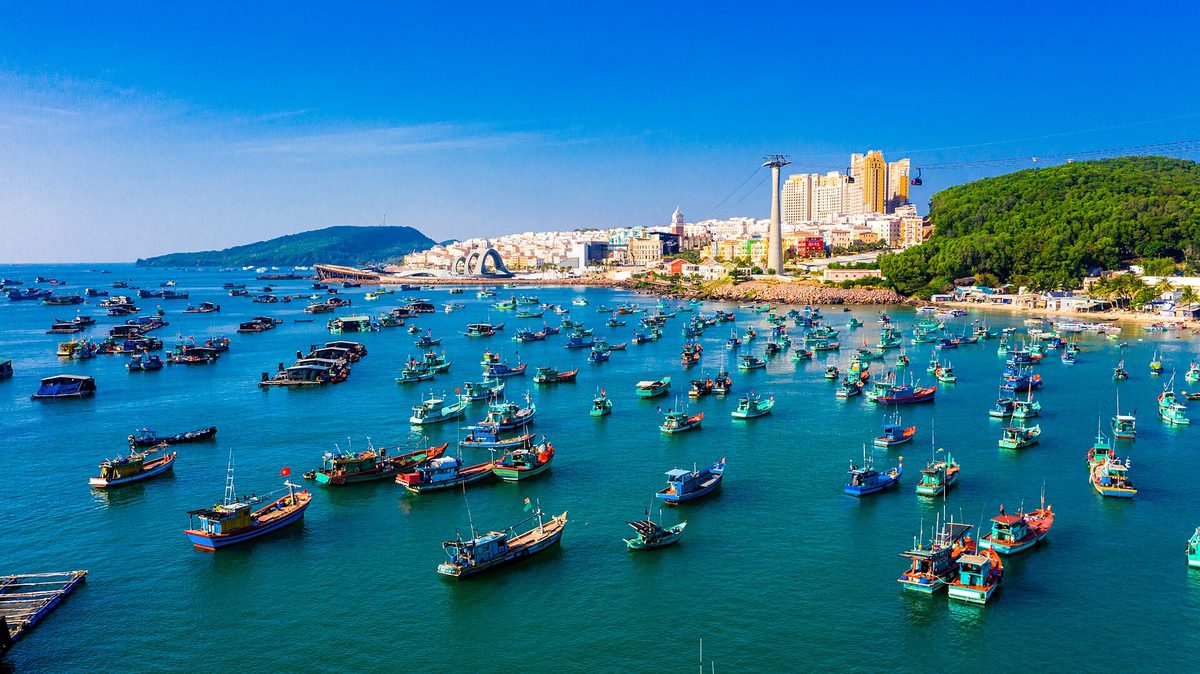
The Phu Quoc airport to An Thoi transfer runs about 20 kilometres south and takes roughly 40 minutes. An Thoi is the island’s working port town and the departure point for the cable car to Hon Thom, which makes it a very different destination from the resort strips further north.
How far is An Thoi from Phu Quoc airport?
Around 20 kilometres, about 40 minutes by car. The road south is sealed and in reasonable condition, but it passes through several villages where the speed drops, so the journey takes longer than the distance suggests.
The final stretch into An Thoi runs alongside the port. Traffic here is a mix of trucks, scooters and pedestrians, and it slows everything down regardless of the vehicle you are in.
An Thoi transfer prices
Rates read live from the MUINE EXPRESS rate source, so the figures below match what is applied at booking.
| Vehicle | Passengers | Price (VND) | Price (USD) |
|---|---|---|---|
| MICRO Sedan | Up to 2 passengers | 780.000₫ | $30 |
| ECONOMY MPV | Up to 3 passengers | 910.000₫ | $35 |
| MINIVAN Minivan | Up to 4 passengers | 1.040.000₫ | $40 |
| MINIBUS 16S Ford Transit | Up to 7 passengers | 1.300.000₫ | $50 |
| MINIBUS 16S+ Hyundai Solati | Up to 9 passengers | 1.430.000₫ | $55 |
| MINIBUS 18S Ford Premium+ | Up to 11 passengers | 1.560.000₫ | $60 |
| MIDI COACH 29S Hyundai/Thaco | Up to 20 passengers | 3.120.000₫ | $120 |
| COACH 45S Hyundai/Thaco | Up to 40 passengers | 5.460.000₫ | $210 |
Prices are per vehicle, not per passenger. VND shown at 26.000 per 1 USD.
The route starts at $30 and reaches $210 for the largest vehicle. There are 9 classes covering 2 to 40 passengers, with the entry rate at 780.000₫ locally.
Pricing is per vehicle, not per seat, so a group splitting one car pays the same total as a solo traveller in it.
What is actually in An Thoi
An Thoi is a port first and a tourist destination second. The harbour is busy with fishing boats and ferries, there is a working market, and the town itself has a lived-in feel that the resort areas do not.
The main draw for visitors is the cable car station, which carries you across the water to Hon Thom island. It is one of the longest sea crossings of its kind anywhere, and the views on a clear day are the reason most people make the trip south.
The ferry terminal for boats to the mainland and to the southern islands also sits here, so travellers island-hopping or heading to Rach Gia pass through An Thoi regardless of where they are staying.
Sunset town and the southern beaches
The area around An Thoi has changed considerably in recent years. A large themed development sits just north of the town with its own restaurants, shops and evening shows, and it draws day visitors from across the island.
Bai Sao and Bai Khem, two of the island’s better beaches, lie between Duong Dong and An Thoi. Many travellers combine a beach morning with an afternoon at the cable car, which works well if you have a car for the day rather than a single transfer.
Transfer, taxi, or ride-hailing
Ride-hailing works at the airport but coverage weakens in the south, and getting a car back from An Thoi in the evening can involve a wait. The town is far enough from the main resort areas that drivers do not naturally circulate there.
Taxis operate from the airport with negotiated fares more often than metered ones. Arrivals unfamiliar with the going rate for a 20 kilometre run usually pay above it.
A pre-booked car removes the negotiation and guarantees a vehicle at the far end, which matters more on this route than on a short town hop.
Pickup at Phu Quoc airport
The terminal is compact and arrivals come out into one hall. Your driver waits with a name board and the walk to the car takes a couple of minutes.
Give the exact address at booking. An Thoi covers the port, the cable car station and the development north of town, and these are several kilometres apart despite sharing a name.
Choosing a vehicle
A four-seat car handles couples and solo travellers comfortably. Three or four passengers with full luggage will want the seven-seat option, mainly for boot space.
Groups above seven take the sixteen-seat van. The road south handles a vehicle that size without difficulty, so there are no access constraints here unlike some northern resort lanes.
Timing your day
The cable car runs on set hours and gets busy in the middle of the day. Arriving early avoids both the queue and the harshest sun on the crossing.
If you are catching a ferry, allow more time than the schedule suggests. Departures shift with weather and sea conditions, and the port is not somewhere you want to arrive in a rush.
Frequently asked questions
How long does a Phu Quoc airport to An Thoi transfer take?
Around 40 minutes for the 20 kilometre journey, allowing for village traffic and the slower approach through the port area.
Can the driver stop at Bai Sao on the way?
The beach is roughly on the route, so a stop is often workable. Arrange it at booking rather than asking in the car, since it changes the journey length.
Is An Thoi a good place to stay?
It suits travellers who want the cable car, the ferries and a working town atmosphere. Those looking for beach resorts generally stay further north.
How do I get to Hon Thom island?
By cable car from the station at An Thoi. Boats also run, but the cable car is faster and is the main reason most visitors come south.
Is a return transfer available?
Yes. Booking the return is sensible here, because cars back from An Thoi in the evening are not always easy to find at short notice.
How much luggage fits in a four-seat car?
Two large suitcases plus cabin bags. More than that and the seven-seat vehicle is the safer choice.
Eating and practicalities in town
An Thoi’s food is where the working port shows through. The seafood comes off the boats a short walk from where it is cooked, and the small places along the harbour road serve it plainly and cheaply. Menus in English are less common than further north, so pointing works better than reading.
The market runs in the morning and winds down by early afternoon. It is a genuine local market rather than a visitor attraction, which makes it worth a wander but not a destination in itself.
Cash is more useful here than card. Several of the smaller restaurants and all of the market stalls take notes only, and the ATMs that reliably accept foreign cards are clustered near the ferry terminal rather than spread through the town.
Weather and sea conditions
The dry season from November to April gives calm water and dependable cable car operation. This is the window when the crossing to Hon Thom is at its best and the ferries keep to schedule.
During the wet months the sea gets rough and both the cable car and the boats can be suspended at short notice. If a specific departure matters to your plans, build a spare day into the itinerary rather than relying on the timetable.
Other Phu Quoc routes
Most arrivals head for the main resort strip on the Phu Quoc airport to Long Beach transfer. Travellers wanting a quieter west coast stay take the Ong Lang transfer, while the far northern resorts are reached by the Ganh Dau transfer.
What travellers get wrong about the south
The most common misjudgement is treating An Thoi as a beach base. The town itself has no swimming beach worth the name, and the good sand is several kilometres back north.
The second is underestimating the journey time. Twenty kilometres sounds like twenty minutes, but the village traffic and the port approach reliably stretch it to forty, and travellers with a cable car booking sometimes cut it too fine.
Related routes
Timings, rates and route guides for the rest of the island and the mainland are collected in the MUINE EXPRESS travel guide.