


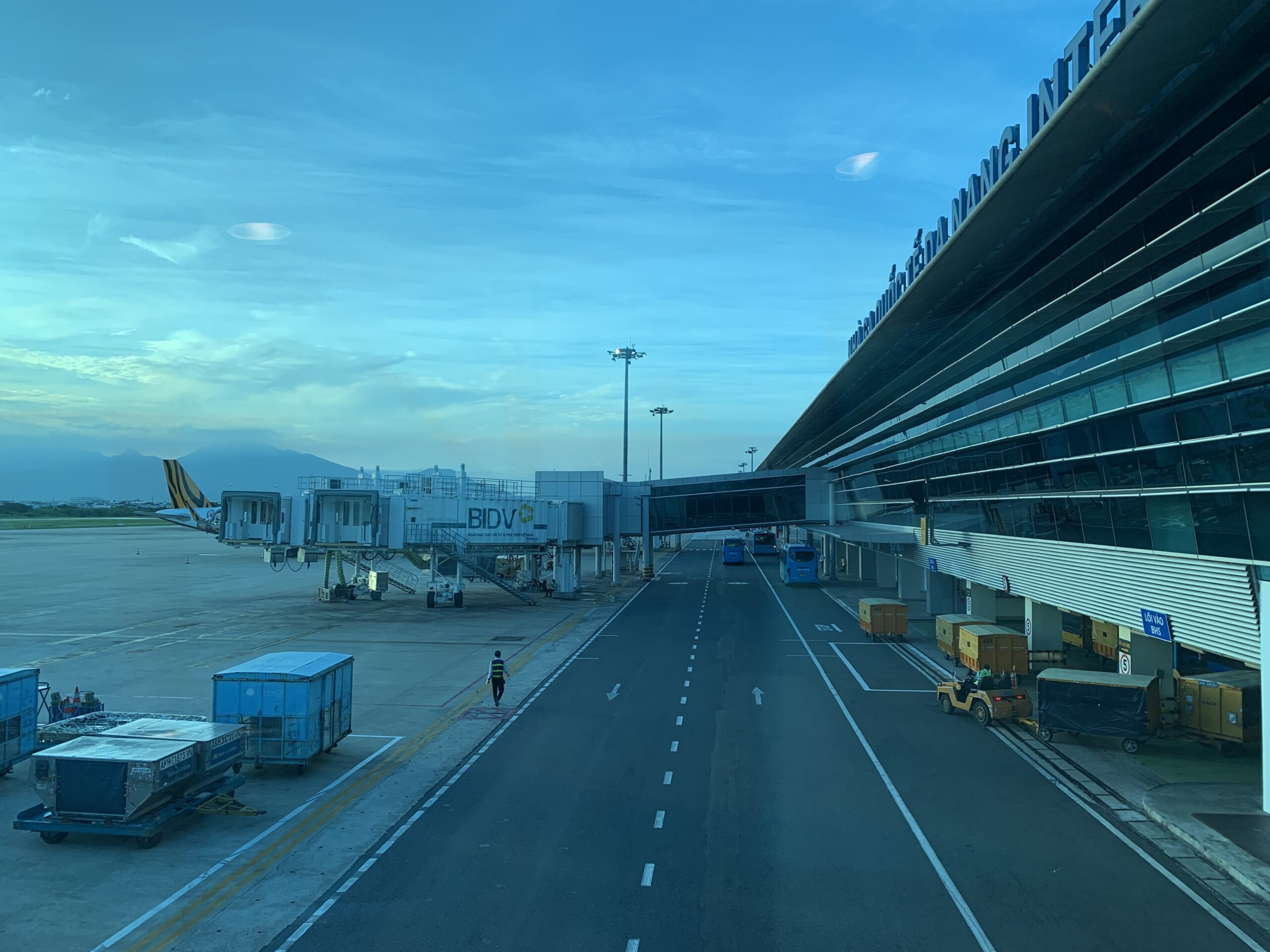
Hue is close enough to Da Nang that the trip barely counts as long-distance, yet far enough that the choice of transport genuinely changes the day. A da nang airport to hue transfer takes a couple of hours, and the decision comes down to whether you want the famous coastal railway or a vehicle that leaves when your flight lands.
This guide covers both, plus what the road actually looks like and what a private vehicle costs on the route today.
Two roads and a tunnel
There are two ways north out of Da Nang, and they are not equivalent.
The Hai Van tunnel cuts straight through the mountain. It is faster, safer in bad weather, and what most drivers use by default. The tunnel itself takes only a few minutes to pass through.
The old Hai Van pass climbs over the top instead. It adds around forty minutes and a great deal of winding, but the view from the summit across the bay is one of the best in the country. Drivers will take the pass if asked, and on a clear day it is worth the extra time. In heavy rain or low cloud it is not — the view disappears and the road becomes genuinely unpleasant.
North of the mountain the road runs through Lang Co and past a series of lagoons before reaching Hue’s southern edge. This stretch is flat, fast and unremarkable.
Journey time and when to leave
Allow around two to two and a half hours via the tunnel, door to door from the airport. Via the pass, add roughly forty minutes plus whatever time you spend at the top.
Traffic is rarely the deciding factor on this route, but two situations do slow it down. Fog on the pass during winter mornings makes the climb slow and pointless, since there is nothing to see. And the section immediately south of Hue backs up during afternoon school and factory finishing times.
Late arrivals are straightforward here. The tunnel operates around the clock and the road is well lit, so a midnight landing still gets to Hue by roughly two in the morning without difficulty.
Vehicles and current rates from da nang airport to hue
This is a short enough run that any vehicle class is comfortable, so most groups choose on luggage and headcount rather than on ride quality.
| Vehicle | Passengers | Price (VND) | Price (USD) |
|---|---|---|---|
| MICRO Sedan | Up to 2 passengers | 1.820.000₫ | $70 |
| ECONOMY MPV | Up to 3 passengers | 1.950.000₫ | $75 |
| MINIVAN Minivan | Up to 4 passengers | 2.080.000₫ | $80 |
| MINIBUS 16S Ford Transit | Up to 7 passengers | 2.340.000₫ | $90 |
| MINIBUS 16S+ Hyundai Solati | Up to 9 passengers | 2.470.000₫ | $95 |
| MINIBUS 18S Ford Premium+ | Up to 11 passengers | 2.600.000₫ | $100 |
| MIDI COACH 29S Hyundai/Thaco | Up to 20 passengers | 5.200.000₫ | $200 |
| COACH 45S Hyundai/Thaco | Up to 40 passengers | 7.540.000₫ | $290 |
Prices are per vehicle, not per passenger. VND shown at 26.000 per 1 USD.
Rates are per vehicle and include the driver waiting in the arrivals hall with a name board. The fleet on this route covers 2 to 40 passengers, and there are 9 vehicle classes to choose between. Full specifications are on the vehicle and price page.
The train question
Search suggestions for this route mention the train more than anything else, including the phrase “heritage train” and “scenic train”, so it deserves a straight answer.
The Da Nang to Hue railway is genuinely one of the best short train rides in Southeast Asia. It hugs the coast around the mountain that the road tunnels through, and there are stretches where the track runs along cliffs directly above the sea with no road access at all. Photographers rate it highly and it costs very little.
The catch is logistics. The train leaves from Da Nang railway station in the city, not the airport, so an arriving passenger needs a taxi across town first. Departures run to a timetable that may not suit the flight. Luggage handling is your own problem, on and off, up steps. And at the Hue end you arrive at the station rather than at your hotel.
The honest recommendation: if the railway is something you actively want to experience, do it as a separate day trip during your stay rather than as an airport transfer. If the goal is simply to get from arrivals to a hotel in Hue with bags and possibly children, a private vehicle does that job far better.
The public bus exists too and is cheaper again, but it is slow, involves a city-centre connection, and has no luggage provision worth mentioning. Few visitors choose it once they see the alternatives.
Weather and the best time to make this drive
Central Vietnam has a rainfall pattern that differs sharply from the south, and it affects this route more than most because of the mountain in the middle.
The wettest months run from September through December, with October and November typically the heaviest. During this period the old pass is frequently shrouded in cloud, which removes the only reason to take it. Rain also brings occasional flooding to the low-lying section around the lagoons north of the tunnel, though the highway itself rarely closes.
February through August is drier and hotter. The pass views are at their best in these months, and the coastal stretch is genuinely beautiful in the early morning light. The trade-off is heat: an afternoon transfer in June or July means a hot walk from vehicle to hotel door at the far end.
If the timing is flexible, a morning departure suits this route better in every season. The light is better, the traffic is lighter, and it leaves the afternoon free in Hue rather than spending it in transit.
Arriving in Hue
Most visitor accommodation sits in a band along the south bank of the Perfume River, within walking distance of the restaurants and bars. The Citadel and the old imperial city are on the north bank, reached across one of the bridges.
The narrower lanes in the hotel district can be tight for larger vehicles. If your property is down an alley, a larger van may need to stop at the nearest corner. This is normal and the walk is short, but it helps to know in advance rather than being surprised.
Several of the royal tombs sit well south of the city, meaning they are broadly on the way in from Da Nang. Groups planning to visit them anyway sometimes ask the driver to stop en route, which saves a separate trip later. Mention it when booking so the timing allows for it.
Frequently asked questions
How far is Hue from Da Nang airport?
Around 100 kilometres by road via the Hai Van tunnel. Over the old pass the distance is similar but the driving time is considerably longer.
How do you get from Da Nang to Hue?
By private car or van, by train from Da Nang city station, or by public bus. The private vehicle is the only one that collects you at the airport and delivers you to your hotel address.
Is the pass or the tunnel better?
The tunnel for speed and reliability, the pass for the view. On a clear day the pass is worth the extra time. In rain or fog, take the tunnel.
Can the driver stop at the royal tombs?
Yes. Several tombs are close to the route, so it is a practical stop rather than a detour. Arrange it in advance so the schedule allows for it.
Is a night arrival a problem?
No. The tunnel is open all night and the road is in good condition, so a late transfer runs at normal speed.
Continuing through central Vietnam
Hue works well as part of a longer route. Heading south, the Da Nang airport to Hoi An guide covers the old town run, and heading north the Phong Nha guide covers the caves. The airport transfers overview shows every route from this airport with current prices.