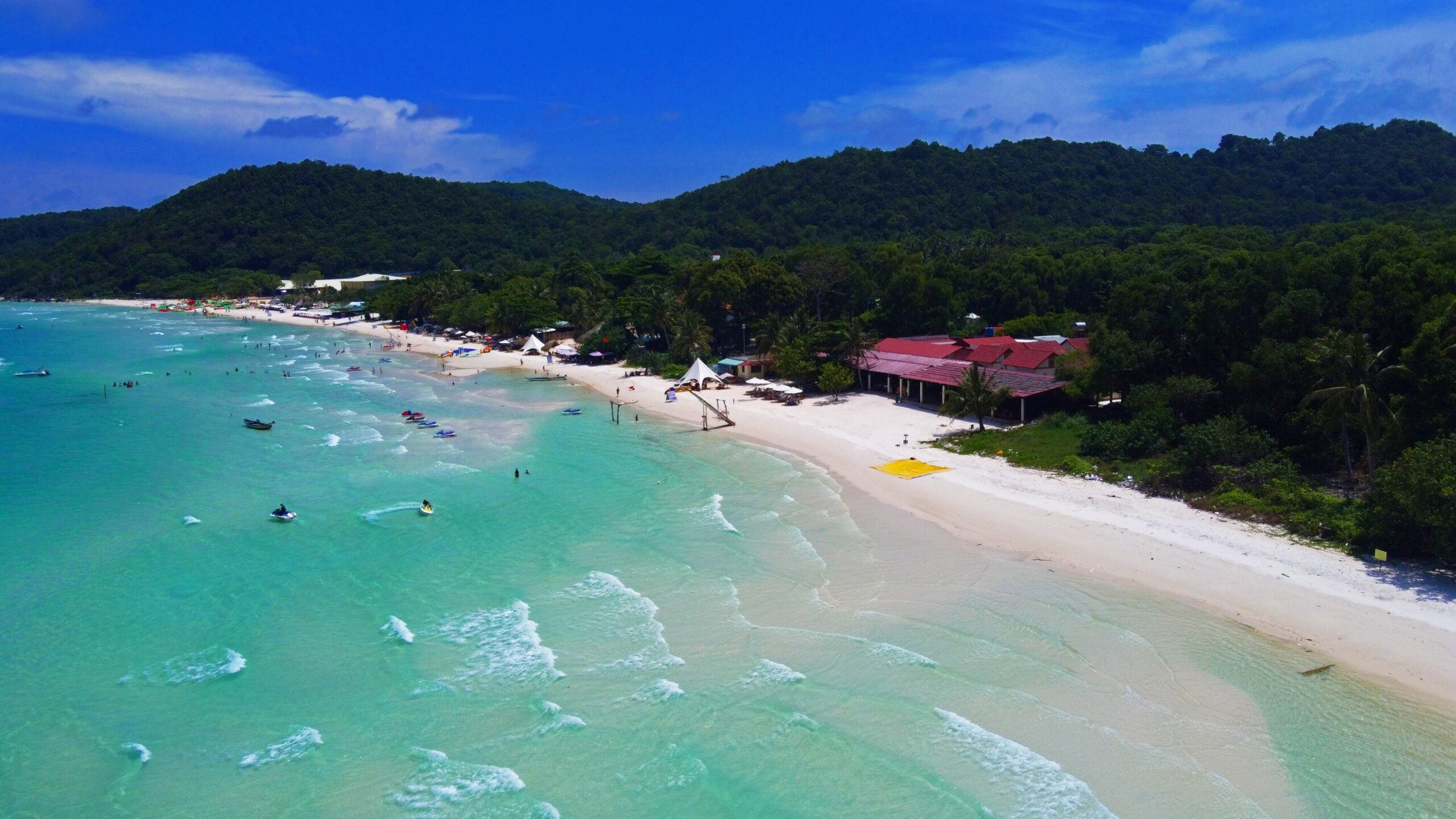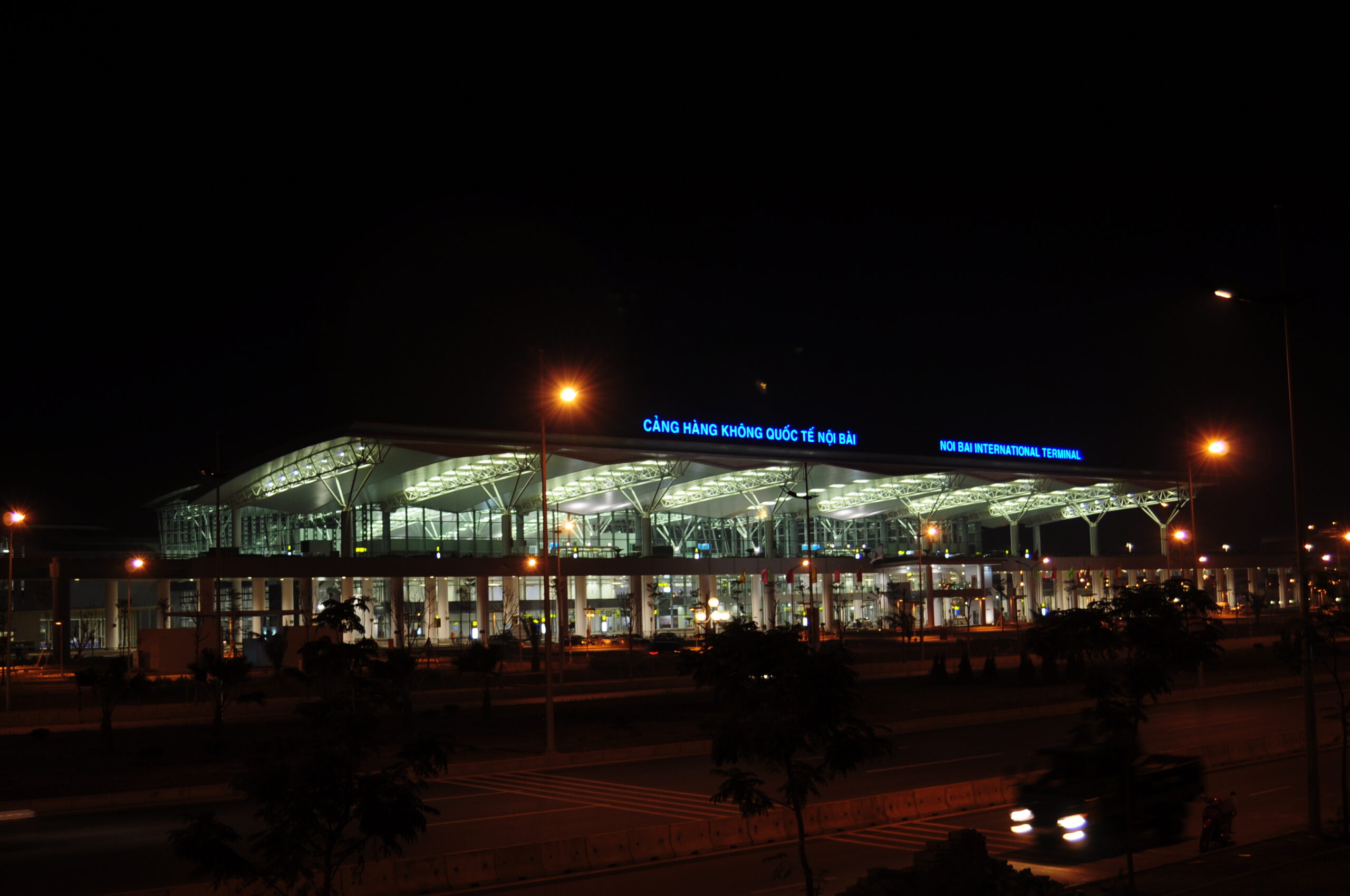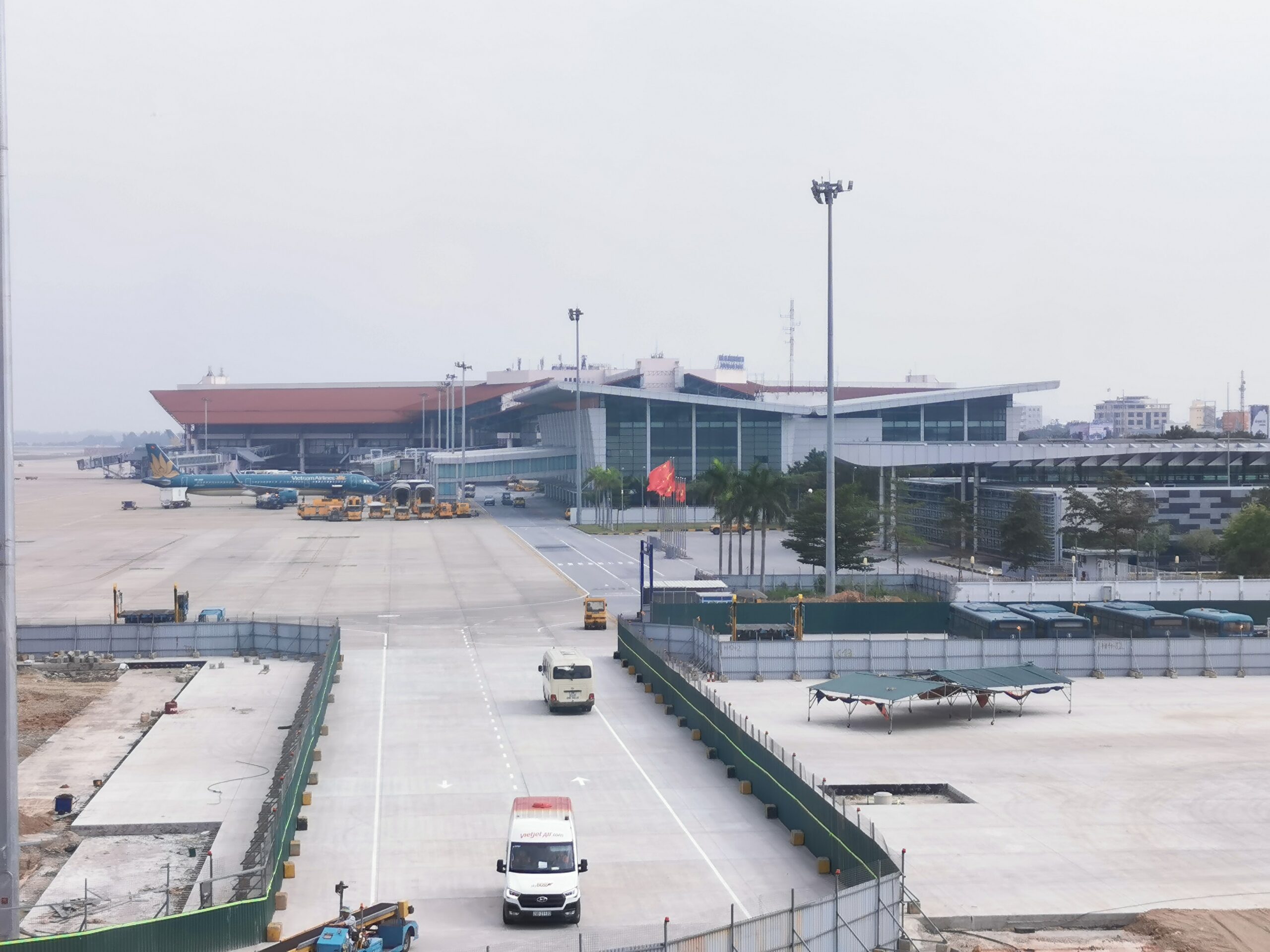

Red sand dunes at Mui Ne, Binh Thuan province, Vietnam

Ho Chi Minh Airport to Mui Ne Transfer: Prices, Times and Vehicles

Arranging a Ho Chi Minh airport to Mui Ne transfer is the step most travellers leave until they have already landed, and it is the step that costs them the most time. Tan Son Nhat sits roughly 220 kilometres from the Mui Ne coast, which is four to five hours of driving. This guide covers the route, honest travel times, what every vehicle class costs, and how the pickup actually works at the terminal.

How far is Mui Ne from Ho Chi Minh airport?

The drive runs east along the coast for about 220 kilometres. Allow four to five hours door to door, and treat that as a working range rather than padding.

The variable is the first hour. Getting clear of Ho Chi Minh City depends entirely on when you land. A 6am arrival clears the outskirts in forty minutes. A 5pm Friday arrival can spend ninety minutes covering the same ground before the expressway even begins.

Once you reach the CT01 expressway the pace improves considerably. The final stretch slows again along the coast road into Mui Ne, where fishing villages and resort entrances line both sides. Drivers who run this route daily plan around four and a half hours as the realistic average.

Ho Chi Minh airport to Mui Ne transfer prices

The table below reads directly from the MUINE EXPRESS rate source, so these are the same figures applied when a booking is confirmed. Prices are per vehicle rather than per passenger, which changes the maths considerably once you are travelling as a group.

Ho Chi Minh airport to Mui Ne transfer prices by vehicle class
Vehicle Passengers Price (USD) Price (VND)
MICRO Sedan Up to 2 passengers $65 1.690.000₫
ECONOMY MPV Up to 3 passengers $70 1.820.000₫
MINIVAN Minivan Up to 4 passengers $75 1.950.000₫
MINIBUS 16S Ford Transit Up to 7 passengers $95 2.470.000₫
MINIBUS 16S+ Hyundai Solati Up to 9 passengers $100 2.600.000₫
MINIBUS 18S Ford Premium+ Up to 11 passengers $105 2.730.000₫
MIDI COACH 29S Hyundai/Thaco Up to 20 passengers $250 6.500.000₫
MIDI COACH 34S Hyundai/Thaco Up to 30 passengers $290 7.540.000₫
COACH 45S Hyundai/Thaco Up to 40 passengers $340 8.840.000₫

Prices are per vehicle, not per passenger. VND shown at 26.000 per 1 USD.

A private car for two starts at $65, while the largest coach on this route reaches $340. In Vietnamese dong the entry price is 1.690.000₫.

Because the rate attaches to the vehicle, four people sharing a minivan pay considerably less each than two people in a sedan. Groups of ten or more usually find a single minibus cheaper per head than any shared-shuttle arrangement.

What the price includes

Worth being specific, because this is where transfer companies differ. The quoted rate covers the vehicle, the driver, fuel, tolls on the expressway, and parking at the terminal. There is no surcharge for a night arrival and no per-bag fee.

What it does not cover is waiting time well beyond your landing, extra stops you decide on mid-journey, or a change of destination once underway. All three are arrangeable, but they need mentioning at booking rather than being sprung on the driver at the roadside.

How the pickup works at Tan Son Nhat

International arrivals come out at Terminal 2. After immigration and baggage you pass through customs into a long arrivals hall with a barrier and a crowd of people holding signs. Your driver waits in that group with a name board.

This matters more than it sounds. Tan Son Nhat arrivals is genuinely busy, and the difference between a driver holding a board with your name and a vague instruction to find a car outside is twenty minutes of stress after a long flight.

If you cannot see the board, phone rather than wander. Drivers hold position rather than circulating, so staying put and calling resolves it faster than searching.

Choosing the right vehicle

Vehicle choice on this route is driven by luggage more than comfort. Mui Ne is a kitesurfing and beach destination, so passengers regularly arrive with board bags, oversized cases, or golf clubs for the courses near Phan Thiet.

A sedan seats two comfortably with two medium cases. Add a third passenger or a third large case and the boot runs out well before the seats do. The MPV and minivan classes exist precisely for this: same road, same driver, considerably more space behind the rear seats.

The rule of thumb from drivers on this route is to book one class larger than your headcount suggests if you are carrying sports equipment. Across this route there are 9 vehicle classes covering 2 to 40 passengers, so both a family and a tour group are served without splitting into separate cars.

Travelling with children

Child seats are fitted per vehicle in advance, not produced on arrival, so they must be requested at booking. Give the child’s age rather than asking generically for a seat, since an infant carrier and a booster are different fittings.

Four to five hours is a long stretch for young children. Parents who have done this route usually recommend the larger vehicle classes purely for the floor space, and asking for an extra stop roughly halfway.

What the journey is actually like

Expect one stop. Most drivers pause at a roadside rest area about two hours in, which is welcome after a long-haul flight. Facilities are basic but clean enough, with cold drinks and instant noodles available.

The scenery shifts noticeably in the final hour. Rice paddies give way to dragon fruit farms, and the plantations around Phan Thiet run right to the roadside. Approaching Mui Ne the road climbs slightly and the sea opens up on the right. Most first-time visitors put their phone down for this stretch.

Air conditioning is standard across all classes and seatbelts are fitted throughout. Vehicles on this route are typically Toyota or Ford, maintained for long-distance work rather than city runs.

When to travel

Mui Ne has a dry season from November to April and this is when the kitesurfing wind is reliable. Those months are also the busiest, so vehicles book out further ahead, particularly around Tet.

The wet season brings shorter afternoon downpours rather than all-day rain, and the drive is unaffected apart from slower going on the coast road. Rates do not change by season.

Private transfer or public transport?

Sleeper buses run this corridor and cost a fraction of a private car. For a solo traveller with a backpack and a flexible arrival, they are a genuine option and worth considering honestly.

What they do not do is collect you from the terminal. You first need to reach a bus station in Ho Chi Minh City, which means a taxi, a wait, and a departure time that has nothing to do with your flight.

The calculation changes with group size. Two or more travellers, or anyone landing late at night, generally find that a direct transfer costs little more than the combined cost of reaching the bus station and buying seats, while removing every connection in between.

How to book

Send your flight number, arrival date and time, passenger count, and how much luggage you are carrying. MUINE EXPRESS reviews the request, confirms the vehicle class, and replies with the total. No payment is taken online.

Flight numbers matter more than travellers expect. A driver holding your flight number can see a delay and shift the pickup accordingly. Without it, a two-hour delay becomes two hours of waiting.

Frequently asked questions

How do I get from Ho Chi Minh airport to Mui Ne?

By private transfer from the terminal, by sleeper bus from a city bus station, or by train to Phan Thiet followed by a taxi. Only the private transfer begins at the terminal door and ends at your hotel.

How long does the transfer take?

Four to five hours depending on traffic leaving the city. Late-night arrivals often complete it in just over four.

Can the driver meet me at arrivals?

Yes. Meet-and-greet inside the terminal is standard and the driver holds a name board.

Is there a train instead?

There is a service to Phan Thiet, around twenty minutes from Mui Ne by road. It runs to a fixed timetable and needs a connection at both ends.

What happens if my flight is delayed?

Provide the flight number at booking. Arrival times are monitored and the pickup is adjusted without a rebooking charge.

How much luggage can I bring?

It depends on vehicle class. State your case count and any sports equipment at booking so the right vehicle is assigned.

Related routes

Continuing along the same coast, the Ho Chi Minh airport to Phan Thiet transfer serves the neighbouring town twenty minutes before Mui Ne. Heading inland instead, see the Ho Chi Minh airport to Da Lat comparison. Every route and vehicle class is listed in the travel guide.

Read More...
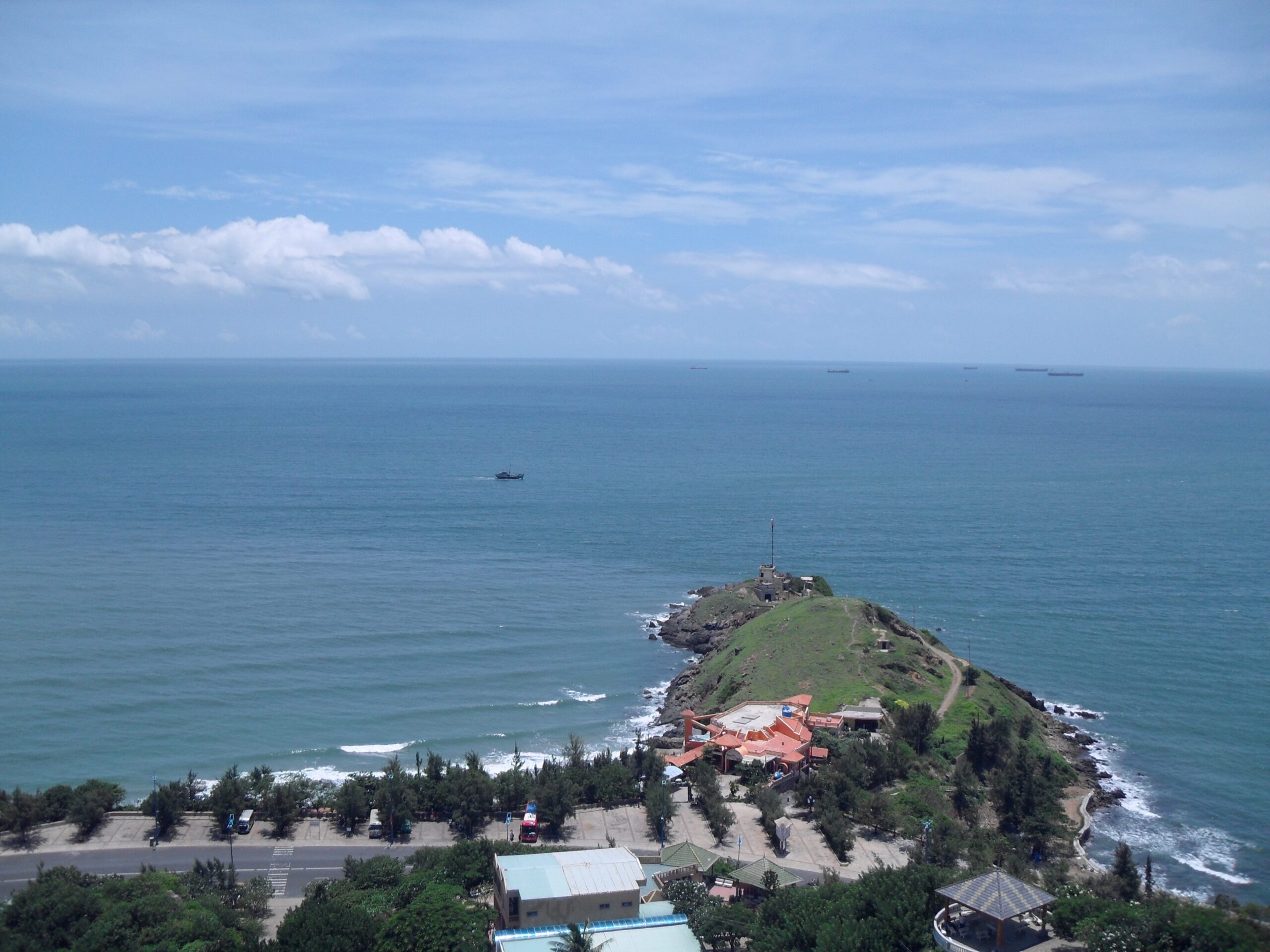
Cap Saint-Jacques headland in Vung Tau seen from the Christ statue

Ho Chi Minh Airport to Vung Tau Transfer: Road, Ferry and Rates

A Ho Chi Minh airport to Vung Tau transfer is the shortest beach run from Tan Son Nhat, which makes it the most requested weekend route of the year. Vung Tau sits about 125 kilometres south-east on a peninsula, close enough for a day trip and far enough to feel like leaving the city behind. This guide covers timing, rates, the ferry comparison, and weekend traffic.

How long the drive takes

Around two to two and a half hours. The route runs through Bien Hoa and Ba Ria before reaching the coast, and traffic on the industrial stretch is the main variable.

Friday evenings and Sunday afternoons are the worst windows, because a large share of Ho Chi Minh City has the same weekend idea. A Saturday morning departure is significantly faster than a Friday at six, often by an hour.

Transfer rates

Ho Chi Minh airport to Vung Tau transfer prices
Vehicle Passengers Price (USD) Price (VND)
MICRO Sedan Up to 2 passengers $60 1.560.000₫
ECONOMY MPV Up to 3 passengers $65 1.690.000₫
MINIVAN Minivan Up to 4 passengers $70 1.820.000₫
MIDI COACH 29S Hyundai/Thaco Up to 20 passengers $80 2.080.000₫
MINIBUS 16S Ford Transit Up to 7 passengers $90 2.340.000₫
MINIBUS 16S+ Hyundai Solati Up to 9 passengers $95 2.470.000₫
MINIBUS 18S Ford Premium+ Up to 11 passengers $100 2.600.000₫
MIDI COACH 34S Hyundai/Thaco Up to 30 passengers $120 3.120.000₫
COACH 45S Hyundai/Thaco Up to 40 passengers $170 4.420.000₫

Prices are per vehicle, not per passenger. VND shown at 26.000 per 1 USD.

The route starts at $60 for the smallest vehicle, with the largest at $170. There are 9 classes covering 2 to 40 passengers.

In local currency the entry rate is 1.560.000₫, and as with every route the price attaches to the vehicle rather than the seat.

Road or ferry?

A fast ferry runs between Ho Chi Minh City and Vung Tau, taking roughly ninety minutes on the water. It is a pleasant trip and avoids the road entirely, which is appealing on a Friday evening.

The structural catch is familiar: the ferry terminal is in the city, not at the airport. You need to get there first with luggage and then match a departure to your flight. If you are already staying in the city centre, the ferry is a good option. Arriving on an international flight, a direct transfer is simpler.

Vehicle notes

Two hours is short enough that vehicle choice comes down to luggage and headcount rather than endurance. A sedan is fine for two. Families should take an MPV, mainly so beach gear is not stacked on laps for the whole drive.

Vung Tau attracts a lot of company outings, and the minibus classes are frequently booked for groups of ten to twenty. Since pricing is per vehicle, group transport works out inexpensive per person on this route in particular.

Day trips and return legs

Many travellers do Vung Tau as a day trip, and the return leg is worth booking at the same time. Finding transport back on a Sunday evening is possible but slow, and prices from local drivers rise with demand.

Booking both directions together also means the same driver, who already knows your hotel and luggage situation. Give an approximate return time; it can be adjusted on the day.

What to expect on arrival

Vung Tau has two main beaches. Back Beach is the long stretch where most hotels sit and where swimming is better. Front Beach is smaller, rockier, and closer to the town centre and restaurants.

The Christ the King statue on the headland is the landmark most visitors climb, and the view from the top covers the whole peninsula. It is around eight hundred steps, so it is a morning activity rather than an afternoon one.

It is a working port city as well as a resort, so oil industry infrastructure sits alongside the beach hotels. That mix puts some visitors off and gives the place more character than a pure resort strip for others.

Booking

Send flight number, arrival time, passenger count, luggage, and hotel name. A confirmation with vehicle class and total comes back by reply, with nothing charged online.

For day trips, mention the return leg in the same message so both directions are scheduled together.

Frequently asked questions

How far is Vung Tau from Ho Chi Minh airport?

About 125 kilometres, typically two to two and a half hours by road.

Is the ferry faster?

On the water it is quicker, but it departs from the city rather than the airport, so total door-to-door time is similar once connections are included.

Can I do a day trip?

Yes, and it is common. Book the return leg at the same time to avoid a slow Sunday evening.

Which beach should I stay on?

Back Beach for hotels and swimming, Front Beach for proximity to the town centre.

Is weekend traffic really that bad?

Friday evening and Sunday afternoon add an hour or more. Travel outside those windows where possible.

Are child seats available?

Yes, fitted in advance. Request one at booking and give the child’s age.

Night arrivals and late returns

Vung Tau is close enough that a late landing still works comfortably. Two hours after midnight means arriving around two, and the roads are clear, which cuts the drive noticeably.

There is no night surcharge. Hotels on Back Beach expect late arrivals and keep a night desk, though telling yours in advance avoids a locked lobby door.

Coming back is where timing matters. A Sunday evening return towards Ho Chi Minh City meets the full weekend exodus, and the two-hour drive can stretch past three. Leaving mid-afternoon or after eight both work better than the five to seven window.

Payment and confirmation

Nothing is charged online. The confirmation reply states the vehicle class and total, and payment happens directly with the driver or at the office.

Keep that confirmation, since it records what was agreed. For company outings needing an invoice, send the company name and tax details at booking rather than afterwards.

Booking for a group

Vung Tau sees more group bookings than any other short route from Tan Son Nhat, mostly company trips and extended families. A few practical points from those bookings.

One larger vehicle almost always beats two smaller ones on price, and it keeps the group together, which matters more than people expect when nobody knows the destination. Confirm the total headcount rather than estimating, because a single extra passenger can push you into the next class on arrival.

For groups over twenty, two vehicles travelling together is the standard arrangement. Both drivers coordinate so the group does not get separated in traffic on the industrial stretch.

Best time to go

Vung Tau works year round, which is part of its appeal as a weekend destination. The dry season from November to April brings the calmest sea and the best swimming conditions.

May to October sees afternoon rain, often brief, and rougher water on Back Beach. Hotel rates soften and the beaches are quieter, which suits a relaxed trip more than a swimming one.

Public holidays are the busiest times by a wide margin. Tet and the April holiday fill hotels and roads together, so both the transfer and the accommodation need booking well ahead.

Talking to your driver

Drivers on this route handle the essentials in English: destination, stops, timing, temperature. Having the hotel name written down, ideally with the Vietnamese address, resolves most arrival confusion instantly.

Back Beach hotels are spread over several kilometres of the same road, so the hotel name alone is not always enough. A map screenshot is the fastest way to get to the right entrance.

Combining Vung Tau with other stops

Because the route is short, some travellers add a stop. Long Hai and Ho Tram, further along the coast, are both within an hour of Vung Tau and quieter.

If you want to visit more than one place, mention it at booking so the driver plans a route and the timing works. Deciding mid-journey is possible but the price and schedule then need renegotiating at the roadside, which nobody enjoys.

Related routes

For a longer beach trip in the other direction, see the Mui Ne transfer or Phan Thiet. If you are staying in the city first, the airport to city centre transfer covers that leg. All routes are listed in the travel guide.

Read More...
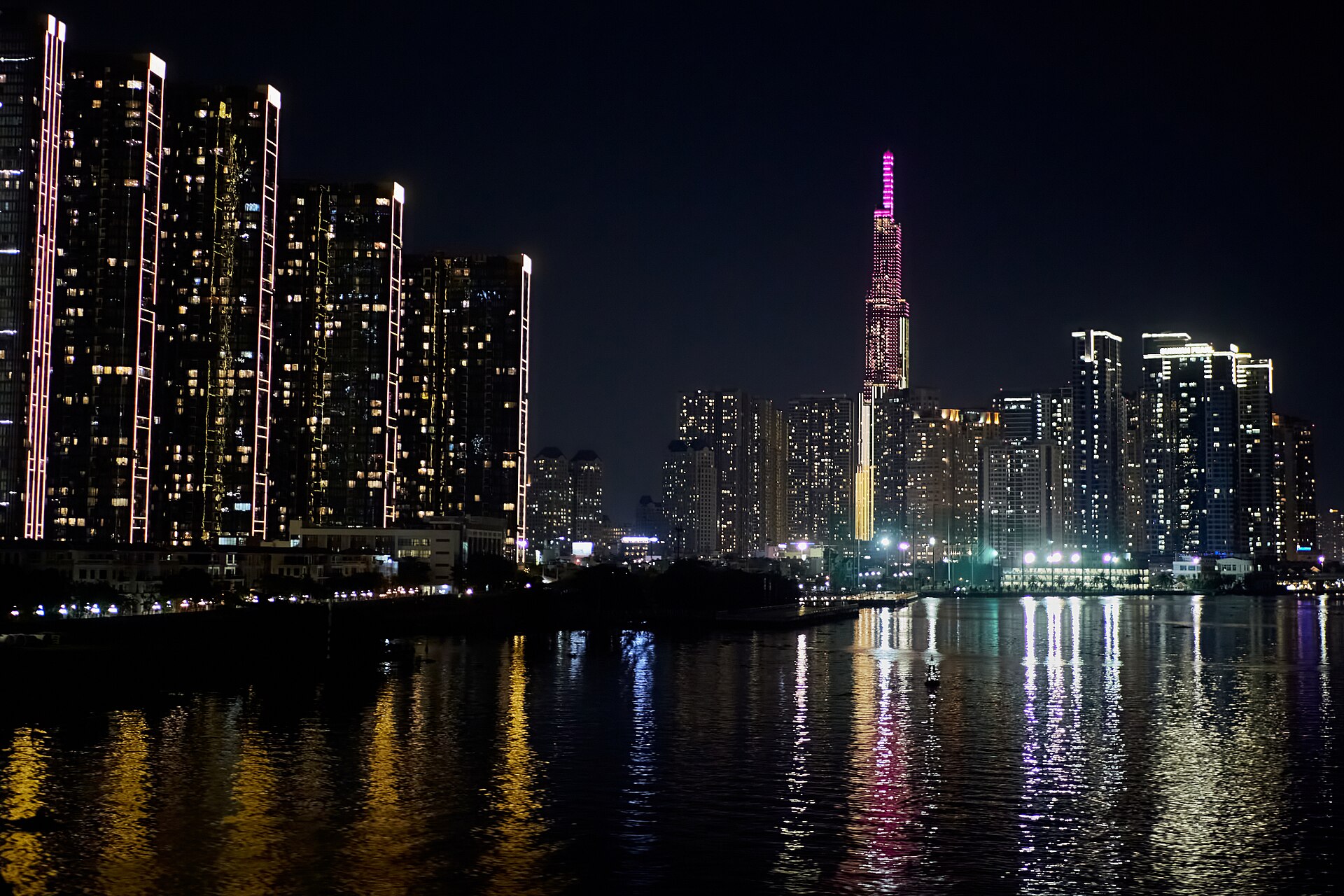
Landmark 81 and the Ho Chi Minh City skyline reflected in the Saigon River at night

Tan Son Nhat Airport to Ho Chi Minh City Centre Transfer: Prices and Options

The Tan Son Nhat airport to Ho Chi Minh City centre transfer is the shortest route on the network at around 7 kilometres, and it is the one where getting the details right saves the most hassle. The airport sits inside the city, so this is a 30 to 45 minute drive that can stretch well past an hour in the wrong traffic window. This guide covers rates, the taxi and Grab comparison, and the scams to avoid at arrivals.

How long does it take to reach the city centre?

Seven kilometres to District 1, but travel time depends entirely on when you land. Off-peak it is 25 to 30 minutes. During the morning or evening rush the same trip regularly takes over an hour.

The bottleneck is the airport approach road and the stretch through Phu Nhuan district. Two lanes carry a great deal of traffic, and there is no way around it.

Plan accordingly if you have an onward connection or a dinner reservation. A 6pm landing does not put you in District 1 by 6:45.

Transfer prices to the city centre

These read live from the MUINE EXPRESS rate source, so they match what is applied at booking.

Tan Son Nhat airport to Ho Chi Minh City centre transfer prices
Vehicle Passengers Price (USD) Price (VND)
MICRO Sedan Up to 2 passengers $20 520.000₫
ECONOMY MPV Up to 3 passengers $25 650.000₫
MINIVAN Minivan Up to 4 passengers $30 780.000₫
MINIBUS 16S Ford Transit Up to 7 passengers $50 1.300.000₫
MINIBUS 16S+ Hyundai Solati Up to 9 passengers $55 1.430.000₫
MINIBUS 18S Ford Premium+ Up to 11 passengers $60 1.560.000₫
MIDI COACH 29S Hyundai/Thaco Up to 20 passengers $110 2.860.000₫
MIDI COACH 34S Hyundai/Thaco Up to 30 passengers $150 3.900.000₫
COACH 45S Hyundai/Thaco Up to 40 passengers $200 5.200.000₫

Prices are per vehicle, not per passenger. VND shown at 26.000 per 1 USD.

The route starts at $20 for the smallest vehicle and reaches $200 for the largest coach. In Vietnamese dong the entry rate is 520.000₫.

There are 9 classes covering 2 to 40 passengers. Pricing is per vehicle, which matters most on this route for groups arriving together.

Transfer, taxi, or Grab

This is the one route where the alternatives are genuinely competitive, and it would be dishonest to pretend otherwise.

Grab works well in Ho Chi Minh City and is usually the cheapest option for one or two people with light luggage. The pickup point is a designated area rather than the arrivals door, which involves a short walk with your bags.

Metered taxis queue outside arrivals. The reputable companies are Vinasun and Mai Linh, and the fare to District 1 is modest. No booking needed.

A pre-booked transfer costs more than both and buys three things: a driver holding your name inside the terminal, a fixed price agreed in advance, and a vehicle matched to your luggage. Whether that is worth it depends on your situation. Landing at 2am with three suitcases and children, it usually is. Arriving mid-morning with a backpack, probably not.

Avoiding problems at arrivals

Tan Son Nhat has a persistent issue with unofficial drivers approaching arriving passengers, and it is worth knowing the pattern.

The approach is usually a friendly offer of a taxi just as you exit customs, before you reach the official ranks. Fares quoted this way are typically several times the metered rate, and the negotiation happens after your luggage is in the boot.

The simple protection is to have arranged transport in advance or to walk to the official taxi rank outside. Anyone approaching you inside the hall with an unsolicited offer is not part of the official system.

If you have booked a transfer, your driver holds a board with your name and does not need to solicit. That distinction is the easiest way to tell the difference.

Which district are you staying in?

Ho Chi Minh City is large and the district matters more than the address for planning the drive.

District 1 is the centre, holding most hotels, the main sights, and the backpacker area around Bui Vien. This is the standard city centre destination and what the route rate covers.

District 3 sits adjacent and is a similar drive. District 7 and Thu Duc are considerably further out, and Binh Thanh is closer to the airport than the centre. Give the hotel name and district at booking so the right route and rate apply.

Choosing a vehicle

On a 30-minute city run, luggage capacity decides the class rather than comfort. Two people with two cases fit a sedan.

The consideration specific to this route is boot space versus passenger count. Business travellers often arrive with a case and a laptop bag each, which fills a sedan boot with three people aboard. The MPV solves it for a small difference in price.

Groups arriving for a conference frequently book minibus classes to stay together in traffic. Two separate cars in Ho Chi Minh City rush hour rarely arrive together.

Late-night arrivals

A large share of long-haul flights land between 11pm and 2am. This is the easiest time to make the drive, since the roads are clear and 20 minutes is realistic.

It is also when the taxi queue is thinnest and unofficial approaches are most persistent. A pre-booked transfer removes both problems, and there is no night surcharge.

Tell your hotel if you will arrive after midnight. Smaller places in District 1 lock the lobby and staff need to let you in.

Onward travel from the city

Many travellers use Ho Chi Minh City as a base for coastal trips. Mui Ne and Phan Thiet are four hours east, Vung Tau two hours south-east, and Da Lat six hours inland.

If you are heading onward after a night or two in the city, the same vehicle classes and per-vehicle pricing apply. Booking the onward leg at the same time as your airport transfer usually works out simpler than arranging it from the hotel.

Payment and confirmation

Nothing is charged online. The confirmation reply states the vehicle class and total, and payment is made directly with the driver or at the office. Keep the confirmation as the record of the agreed price.

Business travellers needing an invoice should send the company name and tax number at booking rather than requesting it afterwards.

Frequently asked questions

How far is District 1 from Tan Son Nhat airport?

About 7 kilometres. Allow 30 minutes off-peak and over an hour in rush hour.

Is Grab cheaper than a transfer?

Usually yes for one or two people. It collects from a designated area rather than the arrivals door.

Are airport taxis safe?

The official ranks are fine, particularly Vinasun and Mai Linh. Avoid drivers who approach you inside the terminal.

Is there a bus into the city?

Yes, route 109 and 152 both run to the centre for a very low fare. They are slower and stop frequently.

Can the driver meet me inside arrivals?

Yes, holding a name board past the customs exit.

Is there a surcharge for a night arrival?

No. Rates are the same at all hours.

Getting around the city once you arrive

District 1 is walkable and most of the central sights sit within twenty minutes of each other on foot. Beyond that, the options are worth knowing before you need them.

Grab covers the city thoroughly and is the default for most visitors, both cars and motorbikes. Metered taxis are plentiful, and Vinasun and Mai Linh are the two companies locals recommend.

The metro opened its first line recently, running from the centre towards Thu Duc, and it is clean and cheap where it goes. Bus coverage is extensive but routes are hard to work out without local help.

Crossing the road takes adjusting to. Traffic flows around pedestrians rather than stopping for them, so the technique is to walk steadily and predictably rather than hesitating mid-crossing.

Airport waiting and departure timing

For the return leg, Tan Son Nhat is busier than its capacity comfortably allows, and queues at check-in and security can be long.

Three hours before an international departure is the sensible margin, and two for domestic. Working backwards, that means leaving District 1 around three and a half hours before an international flight in normal traffic, and four in the evening rush.

Morning departures are the exception. Leaving at five in the morning means an empty road and a twenty-minute drive, so the airport wait is the only real factor.

Accessibility

Wheelchair-accessible vehicles need arranging in advance, since the standard fleet does not carry ramps. Folding chairs travel in the boot of the larger classes.

Tan Son Nhat itself has reasonable step-free access in both terminals, with lifts and accessible toilets. District 1 pavements are less consistent, with frequent parked motorbikes and uneven surfaces, so a hotel with genuine step-free access is worth confirming directly with the property.

Related routes

For coastal trips from the same airport see the Mui Ne transfer, Vung Tau, or Phan Thiet. All routes are listed in the travel guide.

Read More...

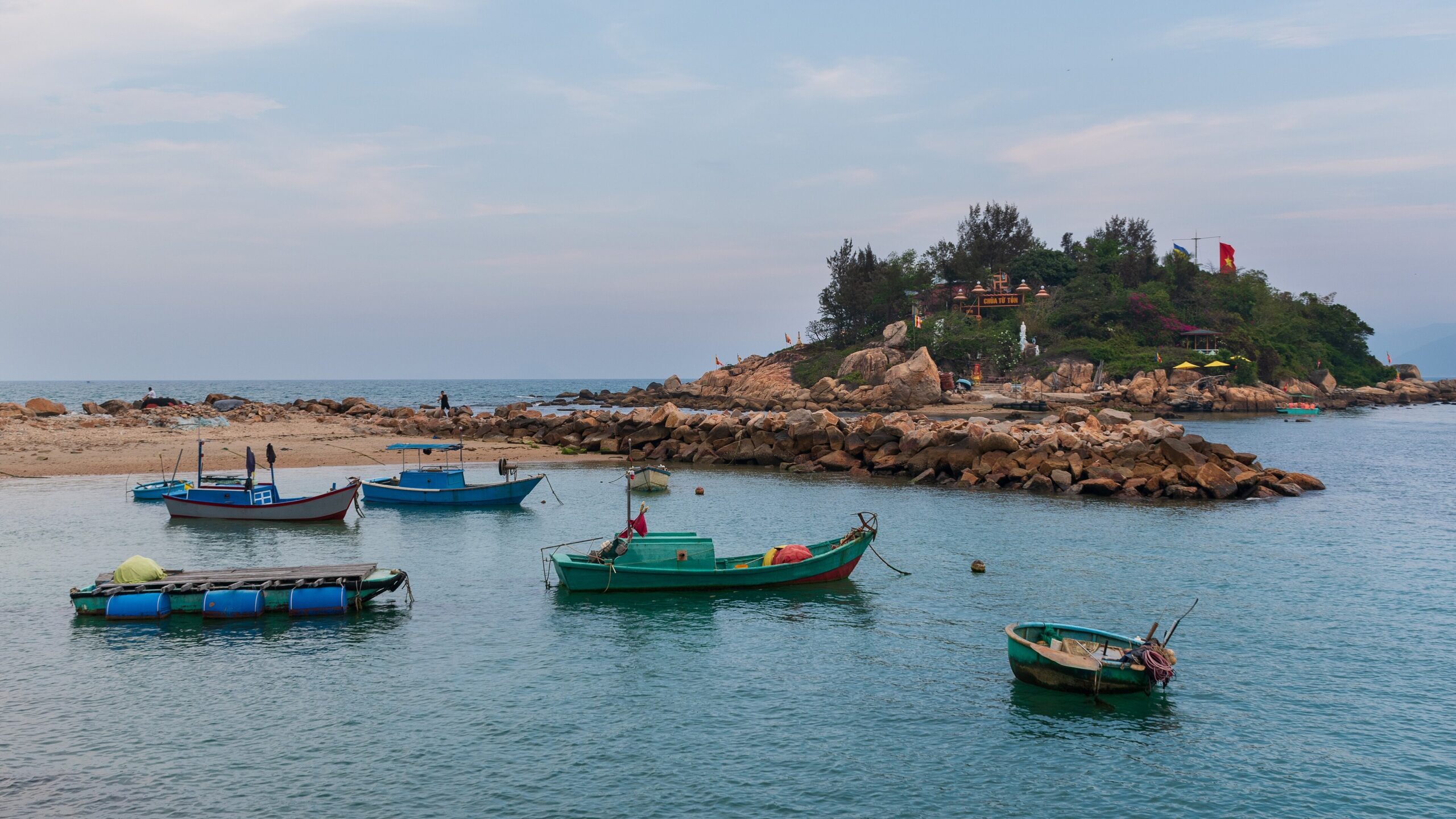
Nha Trang bay with Hon Do island and fishing boats, Khanh Hoa

Cam Ranh Airport to Nha Trang Transfer: Prices, Distance and Options

Every visitor flying into Khanh Hoa province needs a Cam Ranh airport to Nha Trang transfer, because the airport is nowhere near the city it serves. Cam Ranh sits about 35 kilometres south of Nha Trang, a drive of roughly 45 minutes along a coastal road. This guide covers the route, current rates by vehicle, how it compares with airport taxis, and what to expect on arrival.

How far is Nha Trang from Cam Ranh airport?

Around 35 kilometres, or 45 minutes in normal traffic. The road runs north along the coast on a well-maintained stretch that is genuinely scenic, with the sea on your right for most of the drive.

The distance surprises people. Cam Ranh is the airport code most travellers book without checking a map, and arriving to discover the city is three quarters of an hour away catches out anyone who assumed a short hop.

Traffic is rarely a serious factor. The exception is the approach into Nha Trang itself, where the beach road slows in the early evening.

Cam Ranh airport to Nha Trang transfer prices

Rates read live from the MUINE EXPRESS rate source, so these are the figures applied at booking.

Cam Ranh airport to Nha Trang transfer prices by vehicle
Vehicle Passengers Price (USD) Price (VND)
MICRO Sedan Up to 2 passengers $25 650.000₫
MINIVAN Minivan Up to 4 passengers $35 910.000₫
MINIBUS 16S Ford Transit Up to 7 passengers $45 1.170.000₫
MIDI COACH 29S Hyundai/Thaco Up to 20 passengers $45 1.170.000₫
MINIBUS 16S+ Hyundai Solati Up to 9 passengers $50 1.300.000₫
MINIBUS 18S Ford Premium+ Up to 11 passengers $55 1.430.000₫
MIDI COACH 34S Hyundai/Thaco Up to 30 passengers $85 2.210.000₫
COACH 45S Hyundai/Thaco Up to 40 passengers $135 3.510.000₫

Prices are per vehicle, not per passenger. VND shown at 26.000 per 1 USD.

The route starts at $25 for the smallest vehicle and reaches $135 for the largest. In Vietnamese dong the entry rate is 650.000₫.

There are 8 classes on this route, covering 2 to 40 passengers. As always the price attaches to the vehicle, not the seat.

Transfer or airport taxi?

Taxis wait outside Cam Ranh arrivals and will take you to Nha Trang without a booking. For a solo traveller arriving on a daytime flight, that is a perfectly workable option.

Two things make a pre-booked transfer worth considering. The first is late arrivals: Cam Ranh handles a lot of flights landing after eleven, and the taxi queue thins considerably at that hour. The second is price certainty, since a booked transfer is confirmed in advance at a stated total.

Groups tilt the comparison further. Two taxis for five people with luggage costs more than one minivan, and keeps the group split across two vehicles on a road neither driver needs to coordinate on.

What the rate includes

Vehicle, driver, fuel, tolls, and airport parking. No night surcharge and no per-bag fee. Waiting time is included within a reasonable window of your actual landing, tracked through the flight number you provide.

Extra stops or a changed destination need mentioning at booking. Both are easy to arrange in advance and awkward to negotiate at the roadside.

Pickup at Cam Ranh

Cam Ranh is a compact airport with a single arrivals area, which makes meeting a driver considerably simpler than at Tan Son Nhat. Your driver waits just past the exit with a name board.

International and domestic arrivals use separate terminals, so state which you are on when booking. The two are a short walk apart but a driver at the wrong one wastes ten minutes.

Choosing a vehicle

Forty-five minutes is short enough that vehicle choice comes down to headcount and luggage rather than comfort over distance. Two people with two cases fit a sedan easily.

Nha Trang draws a lot of diving and beach holidays, so equipment is common. Dive gear in particular takes more space than expected, and it is worth flagging at booking so the boot capacity is right.

Families of four should take the MPV rather than the smallest class. The saving on a short route is small and the difference in comfort with children and beach kit is not.

Where you are staying matters

Nha Trang stretches along several kilometres of beachfront, and the northern end near the cathedral is a different proposition from the southern resorts.

Give the exact hotel name at booking. The difference between a hotel on Tran Phu near the centre and a resort at the far southern end is another fifteen minutes, and it affects which route the driver takes out of the airport.

Some travellers stay in Cam Ranh itself, on the beach strip near the airport. That is a much shorter transfer and worth checking before you book, since the two areas are often confused in booking listings.

Arriving in Nha Trang

The city is built around a long crescent bay with a promenade running its length. The beach is the main draw, along with island trips, diving, and the Po Nagar Cham towers north of the centre.

It is a busy, developed city rather than a quiet resort town, with a substantial Russian and Korean visitor presence that shapes the restaurant scene. Evenings on the beach road are lively.

Best time to visit

The dry season runs from January to August, with the calmest sea and most reliable sun from March to June. This is the busiest stretch and vehicles book out further ahead.

September to December brings the rain, sometimes heavy, and the sea gets rough. Hotel rates drop considerably. The transfer itself is unaffected apart from slower going in a downpour.

Payment and confirmation

Nothing is charged online. The confirmation reply states the vehicle class and the total, and payment is made directly with the driver or at the office. Keep the confirmation as the record of what was agreed.

If you need an invoice, ask at booking and provide the company details then rather than afterwards.

Frequently asked questions

How far is Nha Trang from Cam Ranh airport?

About 35 kilometres, roughly 45 minutes by road along the coast.

Is there a bus from the airport?

A shuttle bus runs to central Nha Trang. It is cheap, follows a fixed schedule, and drops at a central point rather than your hotel.

Are taxis available at arrivals?

Yes, though the queue thins for late-night flights. A pre-booked transfer removes that uncertainty.

Can the driver wait if my flight is delayed?

Yes. Provide the flight number at booking and arrival times are monitored.

Is the price per person?

No, per vehicle, up to that class’s capacity.

Can I book a return to the airport?

Yes, and doing both at once means the same driver and one confirmation.

Onward travel from Nha Trang

Nha Trang works well as a base, and several destinations are within a comfortable drive. Da Lat is around three and a half hours inland through the mountains, and travellers often pair the two.

Mui Ne is roughly four hours south along the coast, which makes a Nha Trang to Mui Ne leg a common request. Doi Cat, the fishing villages, and the dune landscape are a genuine change of scene from Nha Trang’s city beach.

If you are planning a multi-stop trip, mention it when you book the airport transfer. Arranging the onward legs at the same time usually works out simpler than finding transport in each town.

Accessibility and special requirements

Wheelchair access needs advance notice. Standard vehicles on this route are saloons and minivans without ramps, so a suitable vehicle has to be assigned rather than substituted at the airport.

Folding wheelchairs travel in the boot of the larger classes without difficulty. Give the dimensions at booking if the chair is non-folding, since that changes which vehicle works.

Passengers who need extra time boarding should say so. A 45-minute route has no tight connection to make, and drivers do not rush.

What travellers get wrong about Cam Ranh

Two things catch people out regularly. The first is assuming the airport is in Nha Trang, which leads to booking a hotel without checking the transfer distance.

The second is Cam Ranh’s own beach strip, which has grown considerably and now holds a number of large resorts. Some booking sites list these as Nha Trang properties even though they sit close to the airport, half an hour or more from the city. If your hotel address mentions Bai Dai or Cam Ranh peninsula, your transfer is shorter and cheaper than the city rate.

Check the actual address before booking either the hotel or the transfer, because the two areas offer quite different holidays.

Related routes

For other short airport connections see the Da Nang airport to Hoi An transfer or the Lien Khuong airport to Da Lat transfer. Every route is listed in the travel guide.

Read More...

Xuan Huong Lake in Da Lat with pedal boats and cherry blossom trees

Lien Khuong Airport to Da Lat Transfer: Rates, Shuttle and Timing

Flying into the highlands means arranging a Lien Khuong airport to Da Lat transfer, since the airport sits around 30 kilometres south of the city. The drive takes roughly 40 minutes and climbs steadily the whole way. This guide covers rates, the shuttle bus comparison, and why flying in beats the six-hour road trip from Ho Chi Minh City.

Distance and travel time

About 30 kilometres, or 40 minutes. The road is good and the climb is gradual rather than the tight switchbacks of the Prenn pass further south.

You notice the altitude before you notice the distance. Lien Khuong sits lower than Da Lat, and the temperature drops a few degrees over the course of the drive. Passengers arriving from Ho Chi Minh City in short sleeves feel it by the time they reach the city.

Current transfer rates

Lien Khuong airport to Da Lat transfer prices
Vehicle Passengers Price (USD) Price (VND)
MICRO Sedan Up to 2 passengers $25 650.000₫
MINIVAN Minivan Up to 4 passengers $35 910.000₫
MINIBUS 16S Ford Transit Up to 7 passengers $45 1.170.000₫
MIDI COACH 29S Hyundai/Thaco Up to 20 passengers $45 1.170.000₫
MINIBUS 16S+ Hyundai Solati Up to 9 passengers $50 1.300.000₫
MINIBUS 18S Ford Premium+ Up to 11 passengers $55 1.430.000₫
MIDI COACH 34S Hyundai/Thaco Up to 30 passengers $85 2.210.000₫
COACH 45S Hyundai/Thaco Up to 40 passengers $135 3.510.000₫

Prices are per vehicle, not per passenger. VND shown at 26.000 per 1 USD.

The route runs from $25 for the smallest vehicle to $135 for the largest, with 8 classes covering 2 to 40 passengers.

In local currency the entry rate is 650.000₫. Pricing is per vehicle throughout.

Why fly rather than drive from Ho Chi Minh City

The road route from Tan Son Nhat to Da Lat takes six to seven hours through mountain terrain. The flight takes under an hour, and this short transfer completes the journey.

For most travellers that is the better trade, particularly with children or a tight itinerary. The road transfer earns its place when you are carrying a lot of luggage, travelling as a large group, or want to stop at Bao Loc along the way. The full comparison is in the Ho Chi Minh airport to Da Lat guide.

Shuttle bus or private transfer

A shuttle bus meets flights at Lien Khuong and runs into central Da Lat. It is inexpensive and reliable, and for a solo traveller staying near the centre it works well.

The limitation is where it stops. The shuttle drops at a fixed point in the city, and Da Lat’s streets are steep enough that the last few hundred metres with luggage can be a genuine climb. A private transfer goes to the hotel door.

Timing is the other factor. The shuttle waits to fill, so a late flight can mean a wait at the airport before departure.

Pickup at Lien Khuong

Lien Khuong is small and straightforward. There is a single arrivals area, and your driver waits just outside with a name board. Meeting up takes a minute rather than the ten it can take at a larger airport.

The airport handles mostly domestic flights, with limited international service. Flight numbers should still be given at booking so delays are tracked.

Choosing a vehicle

Forty minutes is a short run, so headcount and luggage decide the class rather than comfort. Two people with normal cases fit a sedan comfortably.

Da Lat draws longer stays than beach destinations, and luggage tends to be heavier as a result. Four passengers with four large cases need the MPV or minivan regardless of how the seating works out.

Groups arriving together for a conference or a family trip should take a single larger vehicle rather than splitting. It is cheaper per head and avoids one car arriving twenty minutes after the other.

Arriving in Da Lat

The city sits around Xuan Huong lake, with the central market and most hotels within walking distance of it. Streets are steep and winding, and hotel addresses can be genuinely hard to find in the older lanes.

A map screenshot of your hotel is more useful than the street name. Drivers know the city well but the lanes near the market are narrow and one-way in places.

Evenings are cold by Vietnamese standards, often around 12 degrees in winter. Keep a jacket accessible rather than packed.

What to see once you arrive

Da Lat is the flower and vegetable centre of southern Vietnam, and the French colonial architecture gives it a distinct character. The lake, the night market, and the surrounding pine forest are the obvious draws.

Waterfalls and coffee plantations sit within an hour of the city, and canyoning has become a significant activity for younger visitors. Most of it needs a vehicle, so ask about day rates if you plan to explore.

Best time to visit

The dry season from November to April brings clear skies and cold nights. December and January are coldest, occasionally near single figures after dark.

Wet season sees afternoon rain and low cloud, which suits the pine scenery and thins the crowds. The transfer is unaffected beyond slower driving in heavy rain.

Weekends fill with domestic visitors from Ho Chi Minh City year round, so midweek means quieter roads and better hotel availability.

Payment and confirmation

Nothing is charged online. The confirmation states the vehicle class and total, and payment is made with the driver or at the office. Keep the confirmation as the record of the agreed price, and ask at booking if you need an invoice.

Frequently asked questions

How far is Da Lat from Lien Khuong airport?

Around 30 kilometres, roughly 40 minutes by road.

Is there a shuttle bus?

Yes, meeting flights and running to a central drop point. It does not go to individual hotels.

Should I fly or drive from Ho Chi Minh City?

Flying is under an hour against six to seven hours by road. Most travellers fly.

Will I need warm clothes?

Yes, especially in the evening. Da Lat is considerably cooler than the coast.

Can the driver take me to a hotel in a narrow lane?

Generally yes. A map screenshot helps in the older streets near the market.

Is the price per vehicle?

Yes, up to that class’s capacity.

Onward travel from Da Lat

Da Lat connects onward in several directions and the roads are scenic in all of them. Nha Trang is around three and a half hours east through the mountains and down to the coast, a popular pairing of highland and beach.

Mui Ne is roughly four hours south-east, dropping from pine forest to sand dunes over the course of the drive. That contrast makes it one of the more memorable road journeys in southern Vietnam.

Ho Chi Minh City is six to seven hours by road, which most travellers avoid by flying. If you are heading that way and want the scenery, the descent through Bao Loc is the reason to do it.

Accessibility and special requirements

Wheelchair users should give notice at booking so an appropriate vehicle is assigned. The standard fleet does not carry ramps, and substituting at the airport is not possible.

Da Lat’s terrain is worth flagging separately. The city is built on hills and many hotels sit on steep lanes with steps at the entrance. If step-free access matters, check the hotel before booking accommodation rather than relying on the transfer to solve it.

Folding wheelchairs fit in the larger vehicle classes. Give dimensions for anything non-folding.

What travellers get wrong about Da Lat

The most common mistake is packing for the tropics. Visitors arriving from Ho Chi Minh City or the coast frequently have nothing warmer than a t-shirt, and Da Lat evenings in December can approach single figures.

The second is underestimating the hills. Da Lat looks compact on a map, and the distances are indeed short, but the gradients are serious. A hotel four hundred metres from the market may involve a climb that is unpleasant with luggage.

The third is assuming everything is walkable. The waterfalls, plantations, and flower gardens that draw people here are spread over a wide area outside the centre, and reaching them needs transport.

Related routes

For the road alternative see the Ho Chi Minh airport to Da Lat comparison. Other short airport connections include Cam Ranh to Nha Trang. All routes are in the travel guide.

Read More...
Lantern boats on the Thu Bon river during the Hoi An lantern festival

Da Nang Airport to Hoi An Transfer: Prices, Old Town Access and Options

A Da Nang airport to Hoi An transfer is one of the most booked routes in central Vietnam, because Hoi An has no airport of its own and Da Nang is the gateway for the entire region. The drive is around 30 kilometres and takes 45 minutes. This guide covers rates, the taxi and Grab comparison, and what to know about the old town’s vehicle restrictions.

How far is Hoi An from Da Nang airport?

Roughly 30 kilometres, or 45 minutes in normal conditions. The route runs south along the coast past My Khe beach and the Marble Mountains, and it is a pleasant drive rather than a functional one.

Traffic is usually light outside Da Nang city itself. The slower section is the final approach into Hoi An, where the roads narrow considerably.

Da Nang airport to Hoi An transfer prices

These rates read live from the MUINE EXPRESS rate source, so they match what is applied at booking.

Da Nang airport to Hoi An transfer prices by vehicle
Vehicle Passengers Price (USD) Price (VND)
MICRO Sedan Up to 2 passengers $25 650.000₫
MINIVAN Minivan Up to 4 passengers $35 910.000₫
MINIBUS 16S Ford Transit Up to 7 passengers $45 1.170.000₫
MIDI COACH 29S Hyundai/Thaco Up to 20 passengers $45 1.170.000₫
MINIBUS 16S+ Hyundai Solati Up to 9 passengers $50 1.300.000₫
MINIBUS 18S Ford Premium+ Up to 11 passengers $55 1.430.000₫
MIDI COACH 34S Hyundai/Thaco Up to 30 passengers $85 2.210.000₫
COACH 45S Hyundai/Thaco Up to 40 passengers $135 3.510.000₫

Prices are per vehicle, not per passenger. VND shown at 26.000 per 1 USD.

The route starts at $25 and reaches $135 for the largest vehicle. There are 8 classes covering 2 to 40 passengers, and in local currency the entry rate is 650.000₫.

Transfer, taxi, or Grab

All three work on this route, and it is worth being straight about the differences rather than dismissing the alternatives.

Grab is widely available in Da Nang and often the cheapest option for one or two people travelling light. The catch is that it depends on driver availability at your arrival time, and a late-night flight can mean a long wait or surge pricing.

Airport taxis queue outside arrivals and need no booking. Prices are metered, and the total for this distance is reasonable.

A pre-booked transfer costs more than Grab and buys certainty: a driver holding your name, a confirmed price, and a vehicle sized for your luggage. For families, groups, or anyone landing after eleven at night, that certainty is usually worth the difference.

The old town vehicle restriction

This is the detail that catches out most first-time visitors, and it is worth understanding before you arrive.

Hoi An’s ancient town is largely pedestrianised, with vehicle access restricted during the day and evening. Cars cannot drive to the door of a hotel inside the protected zone.

What happens in practice is that the driver takes you to the nearest permitted drop point and you walk the last stretch, which may be a few hundred metres. Hotels inside the old town know this and many send someone with a trolley if you tell them your arrival time.

Hotels on the beach at An Bang or Cua Dai, and those on the outskirts, have no such restriction and the driver goes to the door. If step-free arrival matters, check which zone your hotel sits in before booking accommodation.

Pickup at Da Nang airport

Da Nang has separate international and domestic terminals, a short walk apart. State which you arrive at when booking so the driver waits at the right one.

The international terminal arrivals hall is compact and finding a driver with a name board is straightforward. Domestic arrivals is busier at peak times but still manageable.

Choosing a vehicle

Forty-five minutes is short, so class comes down to headcount and luggage. Two people with two cases fit a sedan without difficulty.

Central Vietnam attracts longer itineraries, and travellers often arrive with more luggage than on a beach-only trip. Four passengers with four large cases should take the minivan rather than testing an MPV boot.

Groups visiting for a wedding or a tour frequently book the minibus classes. Since pricing is per vehicle, a group of fifteen in one minibus works out inexpensive per person.

Arriving in Hoi An

The ancient town is a UNESCO World Heritage site and the reason most people come, with its merchant houses, Japanese covered bridge, and lantern-lit evenings.

The beaches at An Bang and Cua Dai are a few kilometres east, reachable by bicycle. Many visitors split their stay between the old town and the beach, and bicycles are the standard way to move between them.

Tailoring is the other draw. The town has hundreds of tailor shops, and anyone planning to have clothes made should allow at least two full days for fittings.

Best time to visit

February to May is the most comfortable stretch, with dry weather and moderate heat. June to August is hotter and busier with domestic visitors.

September to January brings the rain, and central Vietnam can flood. Hoi An sits low and the old town streets have flooded in bad years, which affects access rather than the transfer itself.

Payment and confirmation

Nothing is charged online. The confirmation reply states the vehicle class and the total, and payment is made directly with the driver or at the office.

Keep the confirmation as the record of the agreed price. If you need an invoice for a company claim, provide the details at booking.

Frequently asked questions

How far is Hoi An from Da Nang airport?

About 30 kilometres, roughly 45 minutes by road.

Can the driver reach my hotel in the old town?

Not always. The ancient town restricts vehicles, so expect a short walk from the nearest drop point. Hotels outside the zone have no restriction.

Is Grab available at Da Nang airport?

Yes, and it is often cheaper for one or two people. Availability is less reliable late at night.

Can I stop at the Marble Mountains on the way?

Yes, with advance notice so the timing allows for it.

Is a return transfer available?

Yes. Booking both directions together means one confirmation and the same driver.

How much luggage fits?

It depends on the class. State your case count at booking and the right vehicle is assigned.

Onward travel from Hoi An

Hoi An sits within reach of several major sites, and many visitors use it as a base rather than a single stop.

My Son sanctuary, the Cham temple complex, is around an hour inland and is usually done as a half-day trip. Hue is roughly three hours north over the Hai Van pass, and that drive is worth taking in daylight for the coastal views from the top.

Da Nang city itself is thirty minutes back towards the airport, with the Dragon Bridge, the Marble Mountains, and the Ba Na Hills cable car. Several of these can be combined with the airport transfer if you are leaving and have time before your flight.

Accessibility and the old town

Hoi An presents a specific accessibility challenge that is worth understanding before you book accommodation.

The ancient town has narrow streets, uneven surfaces, and raised thresholds at many building entrances, and it is largely closed to vehicles during the day. For wheelchair users or anyone with limited mobility, a hotel outside the protected zone is usually the more practical choice, since the driver can then reach the door.

Wheelchair-accessible vehicles need arranging in advance. Folding chairs travel in the boot of the larger classes without difficulty.

What travellers get wrong about Hoi An

The vehicle restriction in the old town surprises almost everyone on a first visit. Arriving with heavy luggage and discovering a few hundred metres of walking is a poor start, and it is entirely avoidable by checking the hotel’s zone in advance.

The second misconception is that Hoi An is a beach destination. The beaches are good but they are several kilometres from the old town, and staying in one means commuting to the other. Decide which you want as your base.

The third is tailoring timelines. Having clothes made properly needs two or three fittings across at least two days. Visitors arriving for a single night and expecting a finished suit are usually disappointed with the result.

Related routes

Other short airport connections include Cam Ranh to Nha Trang and Lien Khuong to Da Lat. The complete list is in the travel guide.

Read More...
Fishing boats moored on the Ca Ty river in Phan Thiet city, Binh Thuan

Transfer Ho Chi Minh Airport to Phan Thiet: Rates, Train Comparison and Timing

If you need a transfer Ho Chi Minh airport to Phan Thiet, the practical question is not whether transport exists but which option starts where you actually land. Phan Thiet sits about 200 kilometres east of Tan Son Nhat and serves as the administrative centre for the whole Mui Ne coastal strip. This guide covers travel time, current rates by vehicle, the train comparison, and how booking works.

Distance and travel time

Count on four hours for a direct run, sometimes closer to three and a half if you land before the morning rush builds. The route follows the same expressway used for Mui Ne traffic and turns off slightly earlier.

Phan Thiet is a working town rather than a resort strip. A hotel in the town centre means finishing the drive a little sooner than travellers continuing along the coast to the beach resorts.

Current transfer prices

These rates read live from the MUINE EXPRESS rate source, so what appears here is what applies at booking.

Transfer prices from Ho Chi Minh airport to Phan Thiet
Vehicle Passengers Price (USD) Price (VND)
MICRO Sedan Up to 2 passengers $60 1.560.000₫
ECONOMY MPV Up to 3 passengers $65 1.690.000₫
MINIVAN Minivan Up to 4 passengers $70 1.820.000₫
MINIBUS 16S Ford Transit Up to 7 passengers $90 2.340.000₫
MINIBUS 16S+ Hyundai Solati Up to 9 passengers $95 2.470.000₫
MINIBUS 18S Ford Premium+ Up to 11 passengers $100 2.600.000₫
MIDI COACH 29S Hyundai/Thaco Up to 20 passengers $240 6.240.000₫
MIDI COACH 34S Hyundai/Thaco Up to 30 passengers $280 7.280.000₫
COACH 45S Hyundai/Thaco Up to 40 passengers $330 8.580.000₫

Prices are per vehicle, not per passenger. VND shown at 26.000 per 1 USD.

Entry level for this route is $60 and the top of the range is $330 for the largest coach. In local currency the smallest vehicle works out at 1.560.000₫.

There are 9 classes available, covering 2 to 40 passengers.

Train, bus, or private car

Phan Thiet is one of the few southern coastal destinations with a genuine rail connection, and it deserves a fair comparison rather than a sales pitch.

The train is comfortable and the coastal scenery is good. It is also tied to a timetable that has nothing to do with your flight, departs from a station in Ho Chi Minh City rather than the airport, and arrives at a station outside Phan Thiet that still needs a taxi at the far end. For an unhurried traveller with a morning arrival, it is a pleasant way to cover the distance.

Buses are the cheapest option and the least convenient, for the same structural reason: you must first move yourself and your luggage from the terminal into the city.

A private transfer Ho Chi Minh airport to Phan Thiet is the only option that begins at arrivals. Whether the convenience justifies the difference depends mostly on group size, since the vehicle rate is fixed regardless of how many seats are filled.

What is included

The rate covers vehicle, driver, fuel, expressway tolls, and airport parking. Night arrivals carry no surcharge. Waiting time is included within a reasonable window of your actual landing, which is monitored via your flight number.

Additional stops, a changed destination, or an extended wait need agreeing in advance. None of these are problems when flagged at booking; all three are awkward when raised at the roadside.

Vehicle guidance

Two travellers with normal luggage fit a sedan without difficulty. Families of four should take the MPV or minivan rather than compressing into the smallest class, particularly with four hours ahead.

Larger groups heading to Phan Thiet are frequently here for golf or a company trip, and the minibus and coach classes handle both comfortably. Golf bags in particular eat boot space fast, so mention them at booking.

Because pricing is per vehicle, a group of fifteen in a single minibus pays substantially less per head than the headline figure suggests at first glance.

Pickup at the terminal

International flights arrive at Terminal 2 at Tan Son Nhat. Your driver waits past the customs exit in the arrivals hall, holding a name board. Domestic arrivals use Terminal 1, so state which you are on if you are connecting internally.

The arrivals area is busy at almost any hour. Staying put and phoning is faster than walking the length of the hall looking for a board.

Arriving in Phan Thiet

The town has a long seafront, a busy fishing harbour on the Ca Ty river, and a night market that remains genuinely local rather than tourist-facing. Most visitors treat Phan Thiet either as a base for the Mui Ne dunes or as a stop on the way north towards Nha Trang.

Hotels are spread between the town centre and the coast road heading east. Give the exact hotel name when booking, because the gap between a town-centre hotel and a resort at the far end of the strip is another twenty-five minutes of driving.

Booking

Send the flight number, arrival time, passenger count, luggage details, and hotel name. MUINE EXPRESS confirms the vehicle and total by reply. Nothing is charged online, and the confirmation states the price agreed.

Frequently asked questions

How do I get from Ho Chi Minh airport to Phan Thiet?

By private transfer from the terminal, by train from a city station, or by bus. Only the transfer avoids a separate journey into Ho Chi Minh City first.

How long is the drive?

Around four hours, less with an early arrival, more in Friday evening traffic.

Is there a train from this coastal transfer?

Not from the airport. Trains leave from a city station and arrive outside town, so taxis are needed at both ends.

Can I stop on the way?

Yes. Mention it when booking so the driver can plan the timing.

How much luggage fits?

It depends on the class booked. Give your case count and any golf or sports equipment at booking.

Is the price per person or per vehicle?

Per vehicle. The rate does not change with the number of passengers, up to that vehicle’s capacity.

Night arrivals and early departures

A good share of long-haul flights land at Tan Son Nhat between eleven at night and two in the morning. The drive to Phan Thiet is actually easier at that hour, because the city traffic that normally eats the first hour has gone.

There is no night surcharge on this route. Drivers work through the night regularly and the roads are well used by freight, so it is not a lonely drive. Hotels in Phan Thiet expect late arrivals and keep a night desk, though it is worth telling yours if you will be in after midnight.

The reverse leg matters too. If you have a morning flight out of Tan Son Nhat, leaving Phan Thiet at four gets you there with room to spare. Any later than five and you meet the city rush from the wrong direction.

Payment and confirmation

Nothing is charged online. The booking is confirmed by reply with the vehicle class and the total, and payment happens directly with the driver or at the office.

This is deliberate. It means no card details change hands over email, and it means a change of plan does not involve a refund process. It also means the confirmation message is the record of what was agreed, so it is worth keeping.

If you need an invoice for a company claim, ask at booking rather than after the trip. Details like the company name and tax number are easier to get right in advance.

If your plans change

Flight changes are common and are handled without drama. Send the new flight number as soon as you have it, and the pickup moves.

Cancelling is straightforward and free if done with reasonable notice. What causes difficulty is a same-hour cancellation once the driver is already at the airport, since the journey there has already happened.

Adding passengers is possible if the vehicle class has capacity. Adding a fourth passenger to a sedan booking means moving up a class, and the price difference is confirmed before anything is fixed.

Best time of year to visit

Phan Thiet shares the Mui Ne climate: dry from November through April, wetter from May to October. The dry months bring reliable sun and the strongest wind, which is why the kitesurfing crowd arrives then.

Rain in the wet season tends to be a heavy afternoon burst rather than all-day drizzle, and it does not affect the drive beyond slower going on the coast road. Hotel rates drop noticeably, which makes it good value if you are not chasing wind.

Tet is the exception in both directions. Vehicles book out well ahead, roads are busy with domestic travel, and many local businesses close for several days.

Talking to your driver

Most drivers on this route have working English for the essentials: destination, stops, timing, air conditioning. Detailed conversation is less likely, and that is worth knowing rather than discovering at the roadside.

The practical approach is to have your hotel name written down, ideally with the address in Vietnamese. Hotel booking confirmations usually show both. A screenshot on your phone solves most communication gaps instantly.

If you need something during the drive, a stop or a change of temperature, asking directly works better than hinting. Drivers are generally happy to accommodate and will not offer unprompted.

Related routes

Twenty minutes further along the coast, the Ho Chi Minh airport to Mui Ne transfer serves the resort strip. For a shorter beach run south of the city, see the Vung Tau route, or browse the full travel guide.

Read More...
Xuan Huong Lake in Da Lat with pedal boats and cherry blossom trees

Ho Chi Minh Airport to Da Lat: Private Car or Sleeper Bus?

Searching for the Ho Chi Minh airport to Da Lat route returns mostly bus results, and that reflects how people genuinely travel it. At roughly 300 kilometres through mountain terrain, this is the longest road transfer commonly requested from Tan Son Nhat. This guide compares a private car against the sleeper bus honestly, lists current rates, and explains why flying may be the better answer.

The route and why it takes so long

Da Lat sits at 1,500 metres in the Central Highlands. Reaching it means leaving the coastal plain and climbing the Prenn pass, a winding ascent no vehicle takes quickly. Total drive time is six to seven hours including stops.

The climb is both the most interesting and the slowest part of the journey. Pine forest replaces palm, the temperature drops noticeably, and by the time you reach the plateau a jacket starts to make sense. Travellers who booked Da Lat expecting more beach weather are caught out regularly.

Private car and bus compared

Sleeper buses on the Ho Chi Minh airport to Da Lat corridor are frequent, inexpensive, and reasonably comfortable. They run overnight, which suits budget travellers who would rather sleep through the drive than pay for a bed.

Three things they do not do. They do not depart from the airport, so you need to reach a bus station in the city first. They do not wait for delayed flights. And they set down at a station on the edge of Da Lat rather than at your hotel, which means one more taxi at midnight in cold weather.

A private transfer costs more and removes all three problems. For a solo backpacker the bus usually wins on value. For a family, or anyone landing after dark, the gap narrows quickly once the taxi legs at both ends are counted.

Current rates

Ho Chi Minh airport to Da Lat transfer prices by vehicle
Vehicle Passengers Price (USD) Price (VND)
MICRO Sedan Up to 2 passengers $140 3.640.000₫
ECONOMY MPV Up to 3 passengers $145 3.770.000₫
MINIVAN Minivan Up to 4 passengers $150 3.900.000₫
MIDI COACH 29S Hyundai/Thaco Up to 20 passengers $160 4.160.000₫
MINIBUS 16S Ford Transit Up to 7 passengers $170 4.420.000₫
MINIBUS 16S+ Hyundai Solati Up to 9 passengers $175 4.550.000₫
MINIBUS 18S Ford Premium+ Up to 11 passengers $180 4.680.000₫
MIDI COACH 34S Hyundai/Thaco Up to 30 passengers $200 5.200.000₫
COACH 45S Hyundai/Thaco Up to 40 passengers $250 6.500.000₫

Prices are per vehicle, not per passenger. VND shown at 26.000 per 1 USD.

The route starts at $140 and runs to $250. Rates sit higher than shorter coastal routes, which reflects the distance and the mountain driving rather than a different standard of vehicle.

9 classes are listed, seating 2 to 40 passengers.

Choosing a vehicle for mountain roads

Vehicle choice matters more here than on flat coastal runs. Passengers prone to motion sickness should sit forward and pick a larger vehicle if possible, since the Prenn pass involves sustained cornering rather than occasional bends.

The MPV and minivan classes ride noticeably better on that section than the smallest sedan. For groups, the minibus classes handle the climb without difficulty and give everyone a window, which helps more than people expect on a winding road.

Breaking the journey

Six hours is a long stretch immediately after an international flight. Most drivers stop at least twice, typically once on the plain and once either side of the pass.

Some travellers deliberately break the trip at Bao Loc, roughly two-thirds of the way, where there are waterfalls and tea plantations worth an hour. If you want this, say so at booking so the schedule accounts for it rather than the driver improvising against the clock.

What to pack in the car

Keep a jacket accessible rather than buried in a checked bag. The temperature difference between Ho Chi Minh City and Da Lat is substantial, and the change happens over the final hour of the drive.

Motion sickness tablets are worth having for the pass if anyone in the group is susceptible. Water is usually provided, but the roadside stops are the only reliable food.

Arriving in Da Lat

The city is built around a lake, with the market and most hotels within walking distance of it. Streets are steep, so a hotel that looks central on a map may still involve a serious climb with a suitcase.

Evenings are cold by Vietnamese standards, often around 12 degrees in winter. This genuinely surprises visitors arriving from Ho Chi Minh City in shorts, and the night market is an outdoor affair.

Flying instead

Worth stating plainly rather than burying: Da Lat has its own airport at Lien Khuong, roughly thirty minutes from the city, and a domestic flight from Ho Chi Minh City takes under an hour.

Many travellers fly and take a short transfer at the far end, and for a six-hour road journey that is a sensible choice. The road transfer makes most sense when you are carrying a lot of luggage, travelling as a group, or want to stop along the way. See the Lien Khuong airport to Da Lat transfer guide if you fly.

Frequently asked questions

How long does the drive take?

Six to seven hours including stops. The mountain section cannot be rushed safely.

Is the bus a reasonable option?

Yes, for solo travellers with flexible timing. It does not collect from the airport or deliver to your hotel.

Should I fly instead?

Often yes. Lien Khuong airport is thirty minutes from Da Lat and the flight is under an hour.

Will I need warm clothes?

Yes. Evenings are cool year round and genuinely cold in winter.

Can we stop at Bao Loc?

Yes, with advance notice so the schedule allows for it.

Is the road safe at night?

It is driven around the clock, but the pass is slower after dark. Daytime departures are more comfortable for nervous passengers.

Night arrivals on the mountain route

The Prenn pass after dark is a different proposition from the same road in daylight. It is driven around the clock and the surface is good, but visibility on the bends is limited and drivers go slower, which pushes a six-hour trip closer to seven.

For nervous passengers, a daytime departure is worth planning around. If you land late and would rather not do the pass at night, an overnight in Ho Chi Minh City followed by a morning departure is a reasonable alternative, and it means seeing the highlands scenery rather than sleeping through it.

There is no night surcharge either way. The decision is about comfort rather than cost.

Payment and confirmation

Nothing is charged online. The booking is confirmed by reply stating the vehicle class and the total, and payment is made directly with the driver or at the office.

Keep the confirmation message, since it records the agreed price. If you need an invoice for expenses, mention it at booking along with the company details so they can be entered correctly rather than reconstructed afterwards.

Luggage on a long climb

Da Lat draws a lot of longer-stay visitors, and luggage on this route tends to be heavier than on beach runs. Roof racks are not used on the pass, so everything travels inside the vehicle.

That makes vehicle class a practical matter rather than a comfort upgrade. Four passengers with four large cases will not fit a sedan regardless of how the seats work out. State your case count at booking and the right class is assigned.

Keep a small bag accessible for the drive with water, a jacket, and anything you need at the two stops, so the boot stays closed until you arrive.

Best time of year to visit

Da Lat is temperate year round, which is the whole point of the place. Daytime temperatures sit in the low twenties even when Ho Chi Minh City is above thirty.

The dry season runs from November to April and brings clear skies with cold nights. December and January are the coldest, occasionally close to single figures after dark, which catches out visitors who packed only for the tropics.

The wet season sees afternoon rain and low cloud on the plateau, which suits the pine-forest scenery and thins the crowds. The drive is slower in heavy rain on the pass but not problematic.

Weekends are busy year round with domestic visitors from Ho Chi Minh City, so midweek travel means quieter roads and easier hotel availability.

Talking to your driver

Drivers on the highlands route generally have enough English for destinations, stops, and timing. Complex conversation is less likely, so having your hotel name and address written down, ideally in Vietnamese, removes most friction on arrival.

Da Lat’s steep streets mean some hotels are awkward to reach by car. A screenshot of the hotel’s map pin is more useful than a street name, particularly in the older lanes near the market.

Arriving late in Da Lat

The city quietens early by Vietnamese standards. Arriving after ten means limited food options beyond the night market area, and the cold is noticeable when you step out of a warm car.

Ask your driver to confirm the hotel entrance rather than dropping at the nearest corner. On the steeper lanes the difference between the two is a genuine climb with luggage.

Related routes

If flying into Da Lat, the Lien Khuong transfer is the short connection at the far end. For coastal alternatives from the same airport see Mui Ne, or the complete travel guide.

Read More...
Limestone karst islands rising from the water in Ha Long Bay

Hanoi Airport to Halong Bay Transfer: Prices, Timing and Cruise Connections

A Hanoi airport to Halong Bay transfer covers around 150 kilometres and takes roughly two and a half hours on the expressway, which is considerably faster than it used to be. Most visitors are heading for a cruise departure at Tuan Chau or Hon Gai harbour, and cruise check-in times are fixed, so this is a route where timing genuinely matters. This guide covers rates, the expressway, and how to plan around a cruise departure.

How long is the drive to Halong Bay?

About two and a half hours for 150 kilometres, thanks to the Hanoi to Hai Phong and Hai Phong to Halong expressways. Before those opened the same trip took four hours on the old road, and older guidebooks still quote that figure.

Noi Bai airport sits north of Hanoi, so the route skirts the city rather than passing through it. That avoids the worst traffic and makes the timing reasonably predictable.

Allow a little longer in heavy rain, and expect the final approach to the harbour areas to be slower than the expressway itself.

Halong Bay transfer prices

Rates read live from the MUINE EXPRESS rate source.

Hanoi airport to Halong Bay transfer prices by vehicle
Vehicle Passengers Price (USD) Price (VND)
MICRO Sedan Up to 2 passengers $65 1.690.000₫
MINIVAN Minivan Up to 4 passengers $75 1.950.000₫
MINIBUS 16S Ford Transit Up to 7 passengers $85 2.210.000₫
MINIBUS 16S+ Hyundai Solati Up to 9 passengers $90 2.340.000₫
MINIBUS 18S Ford Premium+ Up to 11 passengers $95 2.470.000₫
MIDI COACH 29S Hyundai/Thaco Up to 20 passengers $100 2.600.000₫
MIDI COACH 34S Hyundai/Thaco Up to 30 passengers $140 3.640.000₫
COACH 45S Hyundai/Thaco Up to 40 passengers $190 4.940.000₫

Prices are per vehicle, not per passenger. VND shown at 26.000 per 1 USD.

The route starts at $65 and reaches $190 for the largest vehicle, with 8 classes covering 2 to 40 passengers. In local currency the entry rate is 1.690.000₫.

Planning around a cruise departure

This is the part that catches travellers out, and it deserves more than a passing mention.

Overnight cruises in Halong Bay almost universally check in around midday and depart shortly after. Miss the departure and the boat leaves without you, because it is running a fixed itinerary with other passengers aboard.

Working backwards from a noon check-in, you want to leave Noi Bai by around 9am. That means a flight landing by 8am at the latest, allowing for immigration, baggage, and the drive.

If your flight lands later than that, the standard solution is a night in Hanoi first and a morning departure. Many cruise operators recommend exactly this, and it is more relaxing than a tight connection with no margin.

Give your cruise name and check-in time at booking. Drivers on this route know the harbours and which pier each operator uses, and that knowledge saves time at the far end.

Which harbour are you departing from?

Halong Bay cruises leave from more than one place, and they are not close together.

Tuan Chau marina is the largest and handles most of the well-known operators. Hon Gai harbour serves others and sits on the opposite side of the bay area. There is also Got pier for Lan Ha Bay departures, which is a different route again.

Getting this wrong costs an hour or more, so check your cruise confirmation for the pier name rather than assuming Halong means one place. Include it when you book the transfer.

Choosing a vehicle

Two and a half hours is comfortable in any class, so luggage and headcount decide it.

Cruise passengers often travel with more luggage than the cruise needs, since the boat requires only an overnight bag. Some operators offer storage at the harbour for the rest. If you are carrying full suitcases, factor that into the vehicle class.

Groups booking a private cruise cabin block frequently take a minibus. Since pricing is per vehicle, a group of twelve pays considerably less per head than the smallest-vehicle rate suggests.

Stopping on the way

The expressway route has few natural stops, but there is usually a break at a rest area with facilities and a shop.

Some travellers ask to stop at the Bai Chay bridge viewpoint for the bay panorama before descending to the harbour. It takes ten minutes and is worth it on a clear day. Mention it at booking if you want it, because a driver working to a cruise check-in will not offer unprompted.

Best time to visit

October to April brings the driest weather, with cool clear days from October to December being ideal for the bay.

Summer is hot and humid with a genuine typhoon risk from June to September. Cruises are occasionally cancelled by the port authority in bad weather, which is a safety decision rather than an operator choice.

Winter can be misty, and while the fog gives the limestone karsts an atmospheric quality, visibility for photographs suffers. February and March are often overcast.

How to book

To arrange a Hanoi airport to Halong Bay transfer, send your flight number, arrival date and time, passenger count, luggage details, and either your hotel name or your cruise operator and pier. MUINE EXPRESS confirms the vehicle class and the total by reply.

The flight number matters on this route more than most. A driver tracking your arrival can absorb a delay without you losing the cruise connection, and that margin is the difference between boarding and watching the boat leave.

If you are booking the return as well, say so in the same message. One confirmation covering both directions is simpler than arranging the second leg from a boat with patchy signal.

Payment and confirmation

Nothing is charged online. The confirmation states the vehicle class and total, and payment happens with the driver or at the office. Keep the confirmation as the record of the agreed price.

For a cruise connection, the confirmation should show your pickup time as well. Check that it leaves enough margin for your check-in rather than assuming.

Frequently asked questions

How long does the transfer take?

Around two and a half hours on the expressway. Older sources quoting four hours predate the current road.

What time should I leave the airport for a noon cruise?

By around 9am, which means landing by 8am at the latest.

Should I stay in Hanoi first?

If your flight lands after mid-morning, yes. Most cruise operators recommend it.

Which harbour will I depart from?

Check your cruise confirmation. Tuan Chau and Hon Gai are the main options and they are some distance apart.

Can I store luggage during the cruise?

Many operators offer this at the harbour. Confirm with your cruise company in advance.

Is a return transfer available?

Yes, and booking both together means one confirmation and a driver who knows the pier.

What to expect on a Halong Bay cruise

Since most people making this transfer are heading for a cruise, a short note on what happens after the drive.

Boats range from basic to genuinely luxurious, and the difference in experience is substantial. Overnight cruises typically include lunch on the day of departure, dinner, breakfast, and a morning activity such as kayaking or a cave visit before returning around midday on day two.

Cabins are compact even on the better boats. Pack an overnight bag and leave the large cases with the harbour storage or your Hanoi hotel rather than carrying everything aboard.

The bay is busy in high season, and the difference between an itinerary that visits the main caves and one that heads for the quieter Lan Ha area is worth researching before booking.

Staying in Halong instead of cruising

Not everyone cruises. Halong City has a substantial hotel strip at Bai Chay, and it works as a base for day trips onto the water.

This suits travellers who dislike small cabins or who are travelling with young children. Day cruises leave from the same harbours each morning and return in the afternoon, and the transfer from Noi Bai runs to your hotel exactly as it would to a pier.

The Bai Chay area has grown considerably, with the cable car and a large amusement park. It is a resort town rather than a fishing village, and expectations should be set accordingly.

Accessibility

Wheelchair-accessible vehicles need arranging in advance for this route, as elsewhere. Folding chairs fit the larger classes without difficulty.

Cruise boarding is the harder part. Most boats are reached via a tender from the pier, involving steps and an unstable transfer at sea level. Some larger operators handle mobility needs better than others, and this is worth raising with the cruise company directly before booking rather than assuming.

Onward travel from Halong

Many visitors continue rather than returning to Hanoi. Cat Ba island is reachable by ferry and road from the Halong area, and it is quieter with better hiking.

Hanoi is two and a half hours back for onward flights, and the same expressway makes the return predictable. If you have an evening flight from Noi Bai after a morning cruise return, the timing generally works with room to spare.

Related routes

For airport transfers elsewhere in Vietnam see the Da Nang airport to Hoi An transfer or Cam Ranh to Nha Trang. Every route is in the travel guide.

Read More...
Aerial view of Sao Beach on Phu Quoc island, Kien Giang

How to Get From Phu Quoc Airport to Hotel: Prices, Times and Options

Knowing how to get from Phu Quoc airport to hotel is the one piece of planning most island visitors leave out, and it is the piece that matters on arrival. Phu Quoc airport sits in the middle of the island, and hotels are spread from Long Beach in the south-west to the resorts of the north, which means transfer times range from ten minutes to nearly an hour. This guide covers rates, journey times by area, and the taxi situation at arrivals.

Where is your hotel on the island?

This is the first question to answer, because Phu Quoc is bigger than most visitors expect at around 50 kilometres from end to end.

Long Beach, or Bai Truong, runs south-west of the airport and holds the largest concentration of hotels along with Duong Dong town. Most journeys here take 15 to 25 minutes.

An Thoi and the southern tip, near the cable car, are roughly 30 minutes south. The northern resorts around Bai Dai and Ganh Dau are 40 minutes to an hour away, and the difference in drive time is significant.

Check your hotel’s actual area rather than relying on the word Phu Quoc in the address. It changes both the journey and the rate.

Transfer prices from Phu Quoc airport

The table below covers the Long Beach route, the most requested on the island. Rates read live from the MUINE EXPRESS rate source.

Phu Quoc airport to Long Beach transfer prices by vehicle
Vehicle Passengers Price (USD) Price (VND)
MICRO Sedan Up to 2 passengers $20 520.000₫
MINIVAN Minivan Up to 4 passengers $30 780.000₫
MINIBUS 16S Ford Transit Up to 7 passengers $40 1.040.000₫
MINIBUS 16S+ Hyundai Solati Up to 9 passengers $45 1.170.000₫
MIDI COACH 29S Hyundai/Thaco Up to 20 passengers $45 1.170.000₫
MINIBUS 18S Ford Premium+ Up to 11 passengers $50 1.300.000₫
MIDI COACH 34S Hyundai/Thaco Up to 30 passengers $85 2.210.000₫
COACH 45S Hyundai/Thaco Up to 40 passengers $135 3.510.000₫

Prices are per vehicle, not per passenger. VND shown at 26.000 per 1 USD.

The route starts at $20 for the smallest vehicle and reaches $135 for the largest, with 8 classes covering 2 to 40 passengers. In local currency that entry rate is 520.000₫.

For hotels in other parts of the island, send the hotel name when booking and the rate for that area is confirmed by reply.

Taxis at Phu Quoc airport

Taxis wait outside arrivals and will take you anywhere on the island. Metered fares are reasonable for the Long Beach area, and for a daytime arrival with light luggage this is a workable option.

Two situations change the calculation. Late arrivals face a thinner queue, and Phu Quoc handles a good number of evening flights. And for the northern resorts, the metered fare on a 40-minute drive adds up, while a pre-booked rate is agreed in advance.

Grab operates on the island but coverage is patchy compared with the mainland, particularly outside Duong Dong. It is not something to rely on for an arrival.

What the rate includes

Every Phu Quoc Airport to Hotel fare covers vehicle, driver, fuel, and airport parking. No night surcharge and no per-bag fee. Waiting time within a reasonable window of your landing is included, tracked through your flight number.

Extra stops, such as a supermarket run before checking in, need mentioning at booking. It is a common request on the island and easy to arrange in advance.

Pickup at the airport

For a Phu Quoc Airport to Hotel pickup, the terminal is compact with a single arrivals area, so meeting a driver is straightforward. Your driver waits just outside the exit with a name board.

The airport handles both domestic and international flights, with the international side growing steadily. Give your flight number so delays are tracked, since island flights are more weather-affected than mainland routes.

Choosing a vehicle

Journey times are short for the Long Beach area, so luggage decides the class. Two people with two cases fit a sedan comfortably.

Phu Quoc is a beach and diving destination, and equipment is common. Dive gear and golf clubs for the courses in the north both take more space than expected, so mention them at booking.

Families should take the MPV or minivan for the northern resorts in particular, where the drive is closer to an hour.

Getting around once you arrive

Worth planning ahead, because the island is not walkable between areas.

Motorbike rental is common and cheap, and the main roads are in reasonable condition. It suits confident riders more than nervous ones, since local traffic habits take adjusting to.

Taxis are available but sparse outside Duong Dong and Long Beach, and waiting times in the north can be long. Many hotels run shuttles to town, which is worth checking before you book excursions independently.

If you plan day trips, arranging a car with a driver for the day often works out better value than several separate taxi fares.

Best time to visit

November to March is the dry season, with calm seas and reliable sun. This is peak season and both hotels and vehicles book out well ahead, particularly around Tet.

April and May are hot but still mostly dry. The wet season from June to October brings heavy afternoon rain and rougher water, and some boat trips are cancelled in bad conditions. Hotel rates drop considerably.

Flights are more weather-affected in the wet season, which is another reason to give your flight number at booking.

Payment and confirmation

Nothing is charged online. The confirmation reply states the vehicle class and total, and payment is made with the driver or at the office. Keep it as the record of the agreed price.

Frequently asked questions

How do I get from Phu Quoc airport to my hotel?

By pre-booked transfer, airport taxi, or hotel shuttle if your property offers one. Times range from 15 minutes to Long Beach up to an hour for the northern resorts.

How far is Long Beach from the airport?

Around 15 to 25 minutes depending on where along the beach your hotel sits.

Are taxis available at arrivals?

Yes, though the queue thins for late flights. Grab coverage is patchy outside the main town.

Do hotels provide airport transfers?

Some do, often at a higher rate than an independent transfer. Check your booking confirmation.

Can I stop at a shop on the way?

Yes, with advance notice. It is a common request.

Is the price per vehicle?

Yes, up to that class’s capacity.

What to see on the island

Phu Quoc rewards a few days rather than an overnight, and knowing what is where helps when you pick a hotel area.

The southern end holds the cable car to Hon Thom, which is among the longest sea crossings of its kind anywhere, along with the An Thoi archipelago for snorkelling and island hopping.

The north has the national park, quieter beaches, and the larger resort developments. Sao Beach on the east coast is the postcard beach most visitors want to see, and it sits closer to the southern end.

Duong Dong town holds the night market, the fish sauce factories, and the pepper farms just outside. It is the practical centre of the island for eating and shopping.

Ferry as an alternative to flying

Fast ferries run to Phu Quoc from Ha Tien and Rach Gia on the mainland, taking between two and three hours depending on the route.

They are considerably cheaper than flying and are the standard option for travellers already in the Mekong Delta. The catch is that reaching either port involves a long road journey first, and sailings are weather-dependent in the wet season.

For most visitors arriving from Ho Chi Minh City or abroad, flying remains the practical choice, and the airport transfer then completes the trip.

Accessibility

Wheelchair-accessible vehicles need arranging in advance. Folding chairs travel in the boot of the larger classes without difficulty.

The island’s newer resorts generally have good step-free access, while smaller guesthouses along Long Beach often do not. Beach access itself is rarely step-free anywhere, and boat trips involve tenders and steps. Confirm specifics with your hotel rather than assuming.

Practical notes for arrival

Cash is still useful on Phu Quoc despite cards being accepted at resorts and larger restaurants. ATMs are available in Duong Dong and at the airport, and it is worth having some dong before heading to a northern resort.

Mobile coverage is good across the populated areas and patchy in the national park. A local SIM from the airport is inexpensive and simpler than roaming if you plan to use ride-hailing or maps.

The island is a visa-exempt zone for many nationalities on stays of up to thirty days, provided you arrive directly. Rules change, so check current requirements before travelling rather than relying on older advice.

Related routes

For mainland airport transfers see the Cam Ranh to Nha Trang transfer or Da Nang to Hoi An. All routes are listed in the travel guide.

Read More...

Turtle Tower on Hoan Kiem Lake in central Hanoi

Hanoi Airport to Sapa Transfer: Prices, Road Route and Timing

A Hanoi airport to Sapa transfer covers roughly 320 kilometres of northwest Vietnam, and it is the single longest airport run most visitors will book on their trip. Getting the vehicle and the departure time right matters more here than on a short city hop. This guide sets out the road route, honest travel times, what changes in the mountains near the end, and the live vehicle rates held in our transfer-rate source.

The road route in plain terms

Noi Bai International Airport sits north of Hanoi, which is an advantage on this journey. You do not need to cross the city centre to head northwest. Vehicles join the Noi Bai–Lao Cai Expressway, known locally as CT.05, and stay on it for the great majority of the distance.

That expressway changed this route completely when it opened. Before it existed, the drive followed older national roads through a string of provincial towns and regularly took eight to nine hours. Today the same journey is a controlled-access road for around 245 kilometres, and the difference is measured in hours rather than minutes.

The expressway ends near Lao Cai city, close to the Chinese border. From there the character of the drive changes sharply. The final stretch to Sapa town is roughly 38 kilometres of climbing mountain road with continuous bends, and it takes about an hour on its own. Sapa sits at approximately 1,500 metres above sea level, and you feel every metre of that ascent in the last section.

How long the drive really takes

Plan for five to five and a half hours door to door in normal conditions. A driver who tells you four hours is either not counting the mountain section or is planning to drive it faster than we consider reasonable.

Several things push that figure upward. Fog is common on the Lao Cai to Sapa climb, particularly between November and February, and it forces genuinely slower driving. Heavy rain has the same effect. Larger vehicles such as the 29-seat and 45-seat coaches take the bends more cautiously than a sedan, so group transfers tend to run at the longer end of the range.

One comfort break is normal on a journey of this length, and most drivers stop at a service area on the expressway roughly halfway. If you have young children or anyone prone to motion sickness, say so when you book — the mountain section is where that matters.

Hanoi airport to Sapa transfer: vehicles and live rates

Every price below is read directly from the MUINE EXPRESS transfer-rate source at the moment this page loads, so it reflects the current published rate rather than a figure typed into an article months ago.

Noi Bai Airport (HAN) to Sapa — private transfer rates by vehicle
Vehicle Passengers Price (USD) Price (VND)
MICRO Sedan Up to 2 passengers $120 3.120.000₫
MINIVAN Minivan Up to 4 passengers $130 3.380.000₫
MINIBUS 16S Ford Transit Up to 7 passengers $140 3.640.000₫
MINIBUS 16S+ Hyundai Solati Up to 9 passengers $145 3.770.000₫
MINIBUS 18S Ford Premium+ Up to 11 passengers $150 3.900.000₫
MIDI COACH 29S Hyundai/Thaco Up to 20 passengers $180 4.680.000₫
MIDI COACH 34S Hyundai/Thaco Up to 30 passengers $220 5.720.000₫
COACH 45S Hyundai/Thaco Up to 40 passengers $270 7.020.000₫

Prices are per vehicle, not per passenger. VND shown at 26.000 per 1 USD.

For this particular route the vehicle choice deserves more thought than usual. Five hours in a compact sedan is a long time for four adults with luggage, even if the passenger count technically fits. Groups travelling to Sapa often step up one vehicle class purely for legroom and luggage space, and on a journey this length that is money well spent.

Luggage is the other consideration. Sapa trips frequently involve trekking gear, and hill-station weather means bulkier clothing than a beach trip. Tell us your bag count when you request the transfer so the vehicle assigned actually fits what you are carrying.

How this compares with the train and the sleeper bus

Two alternatives come up constantly, and both have real merits.

The overnight train from Hanoi to Lao Cai is a genuine option and a pleasant experience. The catch for arriving passengers is that it departs from Hanoi railway station, not from the airport. You would need to get from Noi Bai into the city first, wait for a night departure, then arrange onward transport from Lao Cai station up to Sapa. It works well if you are already spending time in Hanoi; it works poorly as a direct airport connection.

Sleeper buses run the route directly and cost considerably less. They operate to a fixed schedule, stop where the operator chooses, and carry whoever else has booked. If your flight lands late, is delayed, or arrives outside the bus timetable, that saving becomes an overnight stay in Hanoi.

A private transfer earns its price on the flexibility rather than the speed. The driver waits for your actual landing time, the vehicle goes to your specific hotel in Sapa rather than a drop-off point, and the departure happens when you clear customs rather than when a timetable says so.

Practical notes before you travel

Sapa is meaningfully colder than Hanoi. A twenty-degree difference between the airport and the town is unremarkable, and winter nights can approach freezing. Keep a warm layer accessible in the cabin rather than buried in a checked bag.

Mobile signal is reliable along the expressway and mostly reliable on the climb, with occasional gaps between ridges. If you are coordinating with your accommodation, do it before the final ascent.

Many hotels in Sapa sit on narrow streets in the older part of town where large vehicles cannot reach the door. Coaches may need to stop at the nearest accessible point. Ask your hotel where coach drop-off happens if you are travelling with a large group.

Frequently asked questions

How do I get from Hanoi airport to Sapa?

By road, via the Noi Bai–Lao Cai Expressway for most of the distance, then a mountain road for the final 38 kilometres. A private transfer collects you at the terminal and goes directly to your Sapa accommodation. There is no rail or air connection from the airport itself.

How long does the transfer take?

Five to five and a half hours in normal conditions, including one comfort stop. Fog, rain and larger vehicles push it toward the upper end.

How far is Sapa from Hanoi airport?

Approximately 320 kilometres. Around 245 kilometres of that is expressway, and the last 38 kilometres is climbing mountain road.

Can I travel from Hanoi airport to Sapa at night?

Yes, and late arrivals are common because many international flights land in the evening. The expressway is well surfaced and lit at junctions. The mountain climb is slower after dark, so add time to your estimate.

Is a private transfer better than the train for this route?

For a direct airport connection, generally yes, because the train does not serve the airport. The train is a better choice if you are already in central Hanoi and enjoy an overnight rail journey.

How many passengers can one vehicle carry?

The table above lists every vehicle class currently available on this route with its passenger capacity, from small private cars up to full-size coaches.

Other transfers from Noi Bai Airport

Travelling elsewhere in the north? Our guide to the Hanoi airport to Ha Long Bay transfer covers the coastal route east toward the harbour and cruise terminals, with the same live rate table for that journey.

If you want to compare vehicle classes across every route we serve, the full fleet and price page lists all nine classes with passenger capacity.

Ready to book? Request your transfer with your flight number and hotel address, and we will confirm the vehicle and meeting point.

Read More...
HAN — Noi Bai International Airport (Hanoi) terminal

Hanoi Airport to Ninh Binh Transfer: Trang An Access, Timing and Prices

A Hanoi airport to Ninh Binh transfer takes you about 120 kilometres south of the capital to the limestone landscape that UNESCO inscribed as the Trang An Landscape Complex in 2014. A growing number of visitors now skip Hanoi entirely on arrival and head straight there. This guide explains the route, realistic timing, which part of Ninh Binh you are actually going to, and the current vehicle rates.

Where you are actually going

Ninh Binh is a province, and visitors use the name loosely for several distinct places that are near each other but not the same address. Getting this right at booking saves confusion on arrival.

Trang An itself is the boat-tour area with the interconnected caves and karst peaks, and it is the main UNESCO site. Tam Coc, sometimes called the inland Ha Long Bay, is a separate boat route a few kilometres away along the Ngo Dong river. Bai Dinh is a large modern pagoda complex northwest of both. Hoa Lu, the tenth-century capital of Vietnam, sits between them. Ninh Binh city itself is the provincial capital, where many hotels and the railway station are located.

These are all within roughly fifteen kilometres of each other, but a driver needs a specific destination. Tell us your hotel name and address rather than just Ninh Binh.

The route south

The drive leaves Noi Bai, crosses the Red River, and skirts Hanoi rather than passing through the centre. From there it joins the Phap Van–Cau Gie Expressway heading south, then continues on the Cao Bo–Mai Son section toward Ninh Binh province.

This is a genuinely comfortable drive by regional standards. The great majority of the distance is on controlled-access expressway with a consistent surface. The scenery is flat delta farmland for most of the way, and then the limestone karsts appear on the horizon in the final twenty minutes, which is a striking arrival.

Timing

Two to two and a half hours is realistic door to door in normal conditions.

The variable is the Hanoi ring road section near the start. If you land during morning or evening peak, that stretch adds time before you reach the open expressway. Once on the expressway the journey is predictable, which is one of the reasons this route holds its schedule better than mountain routes of similar length.

Arriving in the afternoon works well for a first night in Ninh Binh. The boat tours at Trang An and Tam Coc operate during daylight and stop taking passengers in the late afternoon, so an evening arrival means starting properly the next morning.

Vehicles and live rates

These rates read directly from our transfer-rate source when the page loads.

Noi Bai Airport (HAN) to Ninh Binh — private transfer rates by vehicle
Vehicle Passengers Price (USD) Price (VND)
MICRO Sedan Up to 2 passengers $60 1.560.000₫
MINIVAN Minivan Up to 4 passengers $70 1.820.000₫
MINIBUS 16S Ford Transit Up to 7 passengers $80 2.080.000₫
MINIBUS 16S+ Hyundai Solati Up to 9 passengers $85 2.210.000₫
MINIBUS 18S Ford Premium+ Up to 11 passengers $90 2.340.000₫
MIDI COACH 29S Hyundai/Thaco Up to 20 passengers $90 2.340.000₫
MIDI COACH 34S Hyundai/Thaco Up to 30 passengers $130 3.380.000₫
COACH 45S Hyundai/Thaco Up to 40 passengers $180 4.680.000₫

Prices are per vehicle, not per passenger. VND shown at 26.000 per 1 USD.

Two hours is short enough that the smaller vehicle classes remain comfortable for their stated passenger count. The usual caveat about luggage applies: four passengers with four large cases need more space than four passengers with hand baggage.

Ninh Binh attracts a fair number of small tour groups, and for eight to twelve people the mid-size classes usually work out more economical than several cars, with the added benefit of everyone arriving together.

Why some visitors go straight from the airport

The conventional itinerary spends the first night in Hanoi and travels to Ninh Binh the following day. Going directly has become more popular for a practical reason: Noi Bai sits north of Hanoi, and Ninh Binh sits south, so travelling into the city and out again means crossing the capital twice.

Going directly avoids that entirely, and it means your first morning in Vietnam is spent among the karsts rather than in transit. It works particularly well for visitors on shorter trips who have already decided Hanoi is not their priority.

The trade-off is arriving after a long flight and then sitting in a vehicle for two more hours. If your flight lands late at night, a night in Hanoi first is the kinder option.

The train and bus alternatives

The north–south railway passes through Ninh Binh, and trains from Hanoi take about two and a half hours. As with Sapa, the difficulty is that trains depart from Hanoi railway station, not the airport, so you would need to reach the station first and match a departure time.

Limousine vans run from Hanoi to Ninh Binh frequently and cheaply. They pick up at fixed points in the city rather than at the airport, and they fill their seats before departing.

Neither is a bad option once you are in Hanoi. Neither is a direct airport connection, which is where a private transfer has the clear advantage.

Practical notes

Many Ninh Binh accommodations are homestays and small guesthouses down rural lanes rather than on main roads. Some of those lanes are narrow. Give us the exact address and, if you have it, a landmark or a phone number for the property.

The karst area has limited street lighting outside the towns. Evening arrivals to a rural homestay are easier if the property knows roughly when to expect you.

Boat tours at both Trang An and Tam Coc are rowed, take a couple of hours, and offer no shade beyond a conical hat. Sun protection is worth having in your day bag rather than in a checked case, particularly between April and September.

Frequently asked questions

How do I get from Hanoi airport to Ninh Binh?

By road, skirting Hanoi and heading south on the Phap Van–Cau Gie Expressway. A private transfer collects you at the terminal and drives directly to your Ninh Binh accommodation.

How far is Ninh Binh from Hanoi airport?

Approximately 120 kilometres, most of it on expressway.

How long does the transfer take?

Two to two and a half hours in normal conditions. The Hanoi ring road section at the start is the main variable during peak hours.

Should I go straight from the airport or stay in Hanoi first?

Going directly avoids crossing Hanoi twice, since the airport is north of the city and Ninh Binh is south. If your flight lands late at night, a night in Hanoi first is usually more comfortable.

What is the difference between Trang An, Tam Coc and Ninh Binh city?

Trang An is the main UNESCO boat-tour area, Tam Coc is a separate boat route nearby, and Ninh Binh city is the provincial capital where many hotels are. They are close together but are different destinations, so give your driver a specific address.

Can a large vehicle reach my homestay?

Often, but some rural lanes are narrow. Provide the exact address when booking and we will confirm access or arrange the nearest practical drop-off.

Other routes from Noi Bai Airport

If you are combining Ninh Binh with the coast, our Hanoi airport to Ha Long Bay transfer guide covers the route east to the harbour and cruise terminals.

Heading into the capital first? The Hanoi airport to city centre transfer guide explains the bridge route, timing by hour and Old Quarter access.

Send your flight number and accommodation address and we will confirm your vehicle and meeting point.

Read More...